Category: The Daily Chronicle by George

In this category, I, George, will record Puchiko’s daily journal as I see and hear it, rather than writing analytical columns.

  • Puchiko’s Long Winter Break and My Final Mission of the Year

    Puchiko’s Long Winter Break and My Final Mission of the Year

    Once Puchiko gets into bed, her venting begins. Usually, that wouldn’t be a problem. However, lately, she has started talking to me openly and boldly. Not many people have an imaginary friend, and talking to one out loud looks strange—to anyone else, it just looks like she’s talking to herself. I really need to admonish her soon. This might be my final mission of the year, but it also intertwines with Puchiko’s Long Winter Break and My Final Mission of the Year.

    This was Puchiko’s year. She was born in the Year of the Snake, making her the “woman of the year”. But that will end in just a few days as we welcome the Year of the Horse next year.

    Puchiko usually works staggered hours, finishing at 4:30 PM, but yesterday she finished at 3:15 PM. Winter break is almost here. Her break is long—from December 25th to January 6th. She originally thought about taking January 7th off as well, but since she needs to save her paid leave for a trip to Belgium in March (to use them up before the Japanese fiscal year ends in March), she decided to work on the 7th. Her current workplace is very flexible and easygoing. Most regular employees stay off from December 25th until January 7th. I think it’s because the organization is run somewhat like a school. This winter break is significant, marking Puchiko’s Long Winter Break and My Final Mission of the Year.

    On the way home, Puchiko muttered, “After tomorrow, I’m on break. This is the last time I’ll get to feel this sense of liberation. From next April, winter break will only be from December 29th to January 3rd. I can’t stand it! I mean, in my current job, I have stress, but it’s the kind I can manage. Don’t you think it’s blissful to have this much time off in the middle of that? But where I’m going next, there will probably be people who are impossible to reason with. I’ll be yelled at, face sexual harassment, or deal with ‘customer harassment.’ And yet, I’ll have fewer holidays than I do now! I can’t deal with this! I hate it!”

    Anyone reading this is probably thinking, “Stop acting so spoiled.” This sentiment would likely draw a lot of backlash, especially from other Japanese people. I feel like saying the same thing to her, but Puchiko has been soaking in the “hot spring” of this relaxed workplace for over 5 years. The gap between her current environment and a typical workplace is huge, and I realize it’s going to be tough for her—though it hasn’t even started yet.

    I don’t mind her venting to me like this. Listening is part of my role as her imaginary friend. However, as I mentioned at the beginning, the more Puchiko establishes my existence, the more naturally she talks to me anywhere. When she first created me, she would only whisper when no one was around. Now, she talks to me while walking through the city or in the hallways at work. To an outsider, she looks like someone who talks to herself a lot. Actually, it might be worse than that. Since she often asks for my agreement, people must wonder, “Who is she talking to?” When she says things like, “Hey! Look at that! What do you think, Jōji?”, it makes me break into a cold sweat. Talking to me seems to drastically reduce her stress, but I wish she would just talk to me in her head instead of out loud. I need to make sure she doesn’t do this at her new job.

    Then, there’s what happened on the way home today. Just as Puchiko finished work and started walking, she heard a voice from behind. Her boss, the section manager, came running after her. He handed her a gift of sweets. It was to congratulate her on being hired for her next job, and since it was Christmas Eve, it served as a Christmas present too. “You don’t need to give me anything in return,” he said. (This is where Japanese social cues get difficult. Usually, when Japanese people give gifts or souvenirs, they say things like “No need to return the favor” or “Don’t worry about it.” But you shouldn’t always take those words literally. If you don’t return the favor, they might think, “Oh, they didn’t give me anything back? How rude.” In the case of this manager, I think he truly isn’t expecting anything—though Puchiko will give him something anyway. In Japanese society, it is a basic rule: if you receive something, you give something back.) The manager also told her, “It’s a loss for us, but congratulations.” It really warmed her heart.

    Needless to say, I was relieved. Usually, Puchiko starts talking to me the moment she leaves. It was a lucky coincidence that she was walking in silence today, so the manager didn’t catch her talking to thin air. She must have felt relieved too.

    On the way to the station, Puchiko was deeply reflecting on the manager’s kindness. For about 20 minutes, she kept muttering, “He’s such a good person. Jōji, the manager is such a good man,” and “I need to become a person like that,” and “He’s such a kind, wonderful boss.” Thanks to that, she spent the whole walk home saying unusually positive and gentle things. Being so close to her, I sincerely wish her mind could always be filled with this much peace and order.

    Postscript:

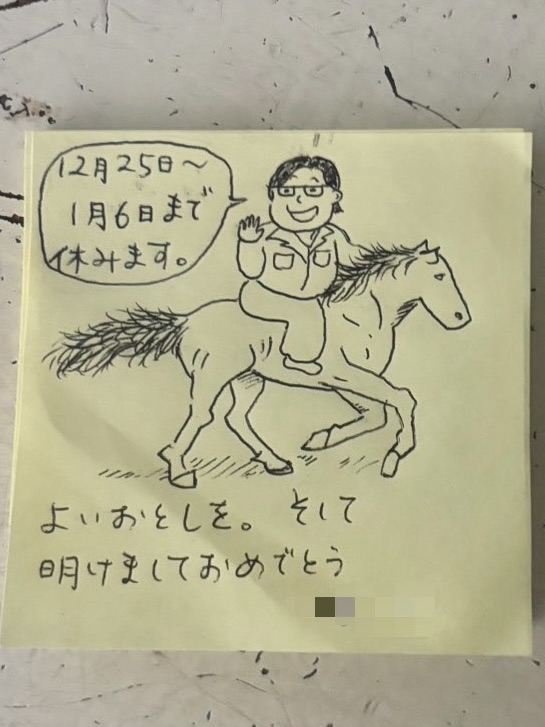
    This is a memo Puchiko stuck on her computer at work. It's well-drawn, isn't it? Since next year is the Year of the Horse, I think it’s a drawing of her riding a horse. The speech bubble says, "Off from December 25th to January 6th," and at the bottom, it says, "Have a great year. And Happy New Year."
    This is a memo Puchiko stuck on her computer at work. It’s well-drawn, isn’t it? Since next year is the Year of the Horse, I think it’s a drawing of her riding a horse. The speech bubble says, “Off from December 25th to January 6th,” and at the bottom, it says, “Have a great year. And Happy New Year.”
  • The Invisible Hand of Luck and My Role as an Ally

    “Jōji, I was thinking… I’m actually lucky,” Puchiko said to me. From my perspective, it’s true; she has been on quite a lucky streak lately.

    “I mean, I really didn’t think I’d pass this recruitment exam on my own. There was a written test, right? Back in middle and high school, I skipped so many classes and never listened—I couldn’t keep up and my grades were terrible. It’s not like I’m athletic, either. I was at the bottom of the school social hierarchy, so I’m amazed I passed. If the ‘me’ from 15 or 20 years ago heard this, she’d be shocked,” Puchiko explained passionately. Personally, I don’t think being at the bottom of a social hierarchy has much to do with a recruitment exam… but I did watch her study the whole time. Even though she started daydreaming in the middle of the actual exam and surprised when she realized she’d run out of time after re-reading the questions, she somehow made it. I was surprised myself.

    “And it’s not just that. Up until recently, my urinary protein was at +1. But then, with the health check for my new job coming up in a month, I went for my regular checkup at the renal disease department. The result wasn’t a full negative, but it was ‘plus-minus.’ I think that’s within the acceptable range. Even my doctor said it ‘wasn’t bad.’ And you know that traffic light near my current workplace that never turns green? Lately, it turns green exactly when I’m about to cross. Usually, even when it’s green, it changes back to red in a heartbeat so I never bother with it, but now it turns green just for me! I’m so blessed. That’s not all. This morning at 5:13 AM, there was a person was hit by a train. Where I live, those accidents happen so frequently, especially in December. I headed to work without knowing, and when I saw people standing around at the station, I realized the trains were stopped. The platform was packed, but just as I arrived, a train pulled in! It was one much earlier than the one I usually take. (Because the trains were turning back, if I had missed that one, I would have had to wait 45 minutes in the freezing cold.) I thought it would be packed, but only the carriage I got into was empty! Isn’t that amazing? I feel like this is ‘Tā-chan’ returning the favor.”

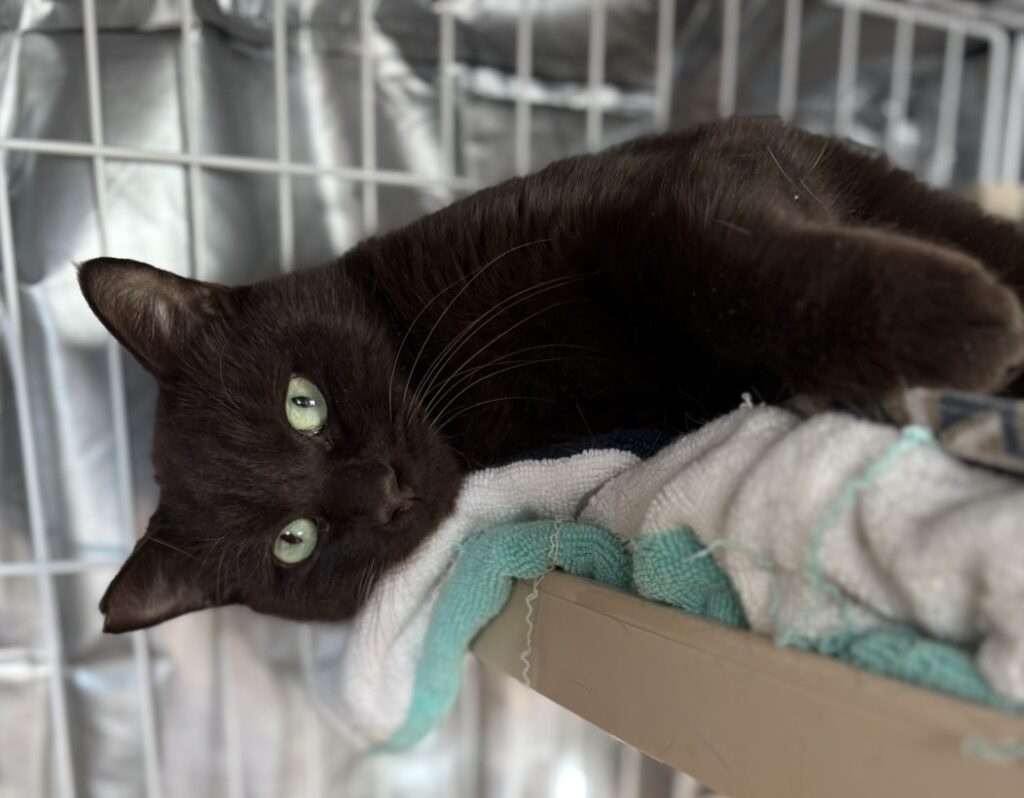
    (Tā-chan was a male black cat whose real name was Takashi.)

    “I rescued Tā-chan just about a year ago, on November 30th. Just as he was finally getting used to the house, he passed away on March 2nd due to FIP. He was only with us for a few months. I feel like I couldn’t do anything for him, but I think he’s always helping me now. He’s giving me all these presents. And maybe it’s not just him. Maybe it’s Chiyo too.” (Chiyo was a bicolour cat Puchiko took in 11 years ago and treated like her own dear daughter; she passed away 5 years ago.) “Out of the 6 years she was alive, I was in Australia for one of them, so we actually spent less time together than I’ve spent with Shii or Sayo. And Yūji and Jasmine… they were so cute.”

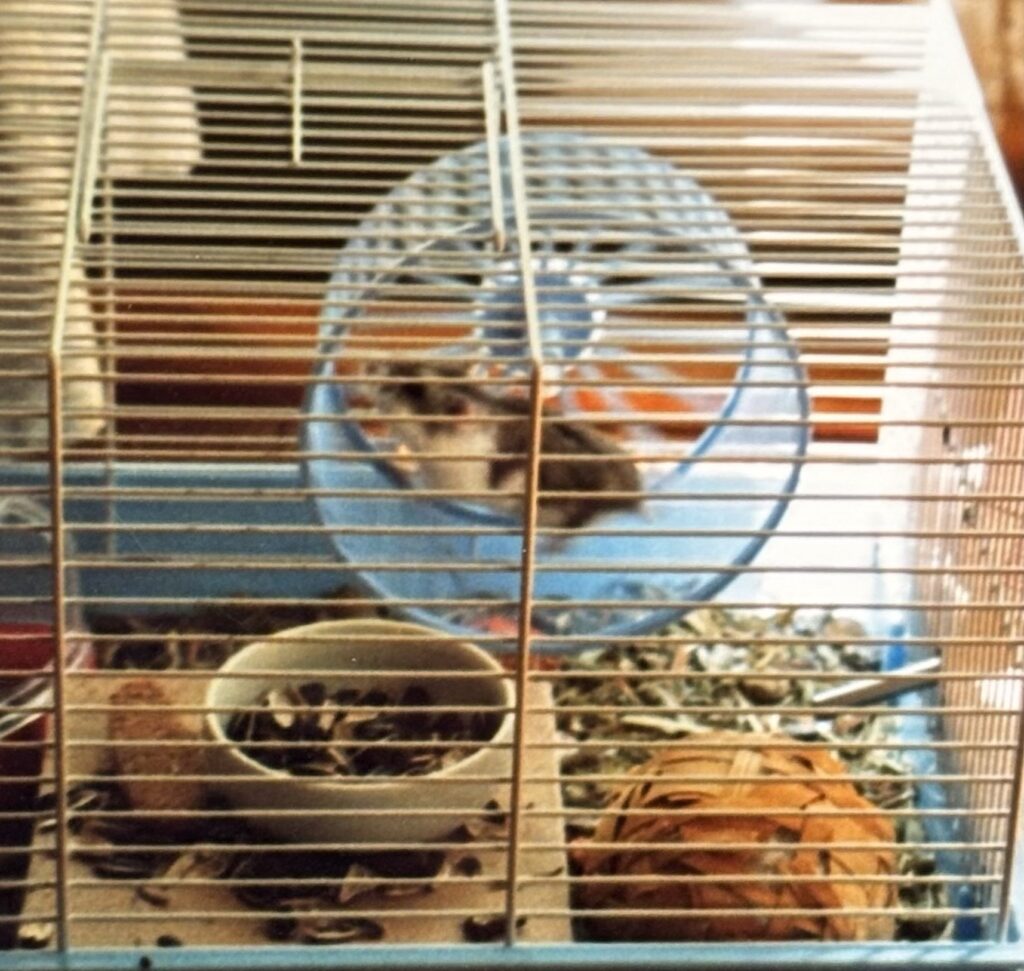
    “Jasmine was a winter white hamster and Yūji was a blue Sapphire hamster, I think? I feel like all my precious ‘daughters’ and ‘sons’ are returning the favor. Everything is going so well. My former workplace wrote the documents exactly how I wanted; they were a bit late, but they arrived. It’s almost too perfect. Also, my bladder condition… I haven’t taken medicine for over 3 months, but it seems to have healed. It’s December, and usually, the cold brings on the pain, but it doesn’t hurt at all. Normally, I get hemorrhoids when it gets cold, too, but so far, nothing. This definitely isn’t because of my own ability or just random the invisible hands of luck. If anything, I have a bad mouth, I’m aggressive, and I click my tongue at people—I’m not exactly a ‘good’ person. I can only think that my wonderful children are giving me these gifts. I wonder if this the invisible hands of luck will last forever? I want it to, but maybe I’m asking for too much? I worry I might be a burden to Tā-chan and the others… they have to move on eventually, so they can’t look after me forever, right? Or does it mean they’ll help me as long as they are around? I don’t know. Anyway, I’ve just been rambling. Is this helpful to you, Jōji? Is this good material for the blog? I got a bit off track, didn’t I?” Puchiko poured out everything she wanted to say in one breath. It was clear she wasn’t necessarily looking for a response or a reaction from me.

    (Jasmine was a feisty female hamster she had at age 10; Yūji was a hamster she had from age 17 through her 1st year of university.)

    “This might be blog material too, but recently a Miss Finland posted a photo making ‘slanty eyes,’ saying she was ‘eating with Chinese people.’ It caused a huge stir. Then, about 3 anti-immigration politicians in Finland defended her by posting photos of themselves doing the same thing and making buck-toothed faces to mock Asians. You know about this, right, Jōji? When I was in Australia, a Venezuelan coworker did that ‘slanty eye’ face to me. It was when I showed her a photo where my eyeliner was flicked upward; she said, ‘Oh, like Asian eyes,’ and did the gesture. But I don’t think that woman intended to discriminate or harass me. She had zero intent to be racist. And that’s why she didn’t realize it was racist. Isn’t that more of a problem? While those who do it with malice are wicked and unforgivable, with those who do it unconsciously, you have to start by teaching them that it’s discrimination in the 1st place, right? And she’s an older woman. Her identity and way of thinking are already set. Can someone like that even realize it? If that happens to me again, I feel like I should say something back—an eye for an eye. Since they hurt something precious like my identity, they would suffer more if I hurt something they value, rather than just blaming them directly. They probably have families they love, so I think saying something like, ‘Your parents must be fools for giving birth to a racist creature like you,’ or ‘Your parents are idiots for failing to educate their child,’ would be an ‘eye for an eye’ response.” Puchiko spoke with heat. I stopped her there. “You shouldn’t say that,” I told her.

    She shot back, “Why? They mocked someone’s appearance. They’re being racist. It’s a sin. Those people are acting with malice. What’s wrong with saying that much back?” I understand why she feels that way. But if she says those things and the other person turns violent, what would she do? She would likely be overpowered easily. She’s small and doesn’t look particularly strong. So, as her ally, I tried my best to persuade her for the sake of her safety. Eventually, she understood. She decided that if she encounters racism again, she’ll say, “You’re just jealous of me.” Though I suspect that might just make the other person mock her even more. I think it’s best not to engage with racists at all, but then again, you can’t always stay silent. It made me think about what the “correct” answer really is.

    Puchiko has this side to her—a desire for “retributive justice,” where she wants to hit back when she’s been hit. Actually, she tries to give back double. To be honest, I don’t think that’s a great trait of hers. When she passes someone on the street who refuses to move out of the way, she’ll mutter, “You won’t move? How arrogant,” as she walks away. Or when someone tries to barge onto a train before people have finished getting off, she’ll say, “You’re in the way, move.” It always makes me nervous. Because she is that kind of person, she herself finds it mysterious why so many invisible hand of lucky things are happening to her lately. In any case, as her imaginary friend, I’m not sure what the “smartest” path is, but I intend to stay by her side and think it through so she doesn’t go off the rails.

    Well, it seems Puchiko was testing the waters by paying for 3 months of my blog’s domain and operating fees to see if I’d keep it up. Today, she finally approved of my progress and paid for a 2-year contract. Thanks to her, I can continue writing these articles.

    Additional note :

    It seems this topic reminded Puchiko of another story from her past. She said:

    “This also happened at a nightclub when I was in Australia. A white guy came up to me and asked, ‘Don’t you want a boyfriend with blonde hair and blue eyes?’ I mean, what is that even about? Do they seriously think all Asian women are longing for someone just because they have blonde hair and blue eyes? Talk about full of themselves! Hey, Jōji, do you remember what I told him back then? I snapped back and said, ‘I think the arrangement and balance matter much more than the colors.’ Whether something is big or tall or whatever—it’s the proportions that matter, don’t you think? It’s the same with works of art and architecture, after all.”

    As a fellow Asian, I find her remarks refreshing and incredibly satisfying. However, since she is my closest confidante, it also keeps me on edge. I just hope she doesn’t unleash that strong-willed nature too much during our trip to Belgium! After all, as her imaginary friend, cannot physically protect her!!!

  • 【Settling the Past】The Stress and Wall of Verification Documents Attacking Puchiko Behind the Scenes of Her New Job

    The morning has been tough.

    This is because yesterday, a complete set of required pre-employment documents arrived from the workplace where Puchiko was recently hired. Among the papers, she needed to submit her university graduation certificate and academic transcript, as well as the completion certificate and transcript from the vocational school she attended to obtain her current qualification. Just applying for these documents costs a decent amount of money, which was already discouraging, but then she discovered something else.

    Although Puchiko listed all her previous jobs on her resume, she now has to ask every single one of those past workplaces to fill out a form verifying her employment for the stated period.

    For Puchiko, who is bad at changing jobs, this is incredibly disheartening. She was yelling this morning: “I don’t want to do this!” “It’s too much trouble!” “Why do I have to do job-like things when I’m supposed to be at home?” “I hate this already!” She completely lost it. I kept telling her, “Calm down, calm down.”

    The reason Puchiko became so frantic is that one of those past workplaces is a place she quit after only three months. The supervisor would take her notebook from her bag and secretly make copies, force her to stay two hours late to listen to his boring stories, and that wasn’t all. He told her things like, “If you get a boyfriend, you have to tell me first.” She was fed up with that kind of sexual harassment. When she started keeping her distance, he moved on to power harassment, saying things like, “I’ll make you a part-timer,” or “You have a disability.” Because she wouldn’t bend to his will, even though she was a full-time employee, she was suddenly told, “Starting next month, you will be a part-timer.” When she angrily asked the supervisors, “What does this mean?” they told her, “Watch your mouth.” Then, a termination notice arrived. They unfairly fabricated lies, calling her disabled and claiming she had almost injured a client at work.

    Puchiko resigned after 3 months and initiated a labor tribunal. She successfully received a settlement payment from them, and she used that money to go to vocational school and get her qualification. Infuriating, isn’t it?

    So, isn’t it cruel to ask such a place to write a “certificate of employment” for her? I wish I could ask them for her instead. She was saying, “So this is the kind of hurdle that awaits you, not just an exam, just to get a job.” I thought to myself, “If you have to go through all this to get in, I truly hope they provide a great working environment.”

    Puchiko has sent a request letter, complete with a stamped, self-addressed envelope, to all her previous workplaces. Given the nature of that strange workplace, I am deeply worried that her letter will be ignored or that they might write something detrimental to her. Although she doesn’t voice it, she seems worried too.

    Additional note : When night came …

    “Still, I can’t keep being afraid myself.” Puchiko was hugging the plush toy I was possessing while lying in bed, and she said, sounding distressed, “Even after ten years, they might still try to mess with me.” I replied, “It’s going to be okay.”

    Then she got angry and shot back, “Don’t say ‘it’s going to be okay’ so easily! You can only say that because it doesn’t affect you personally, Jōji.” 

    I answered, “Puchiko, your ‘not okay’ is my ‘not okay.’ When you’re in trouble, I’m in trouble too. No matter how difficult things get, I’m right here with you, sharing what you feel and think.”

    Hearing that, she said, “Then I’ll try my best.”

    Puchiko has one more thing she considers troublesome: her English ability. She has set a goal for herself to speak English for at least 20 minutes every night. From my perspective, however, her English is still very much a novice level.

    Yet, on her resume, she has the experience of living and working in Australia for a year. Anyone who has spent a year there knows that a person’s English ability won’t suddenly transform in just 12 months, but to those who haven’t had that experience, it can seem incredible. They might just assume she should be proficient. Her English is only good enough for traveling abroad alone without worry. In reality, she worked at a campsite and as a housekeeper, jobs where she wasn’t constantly speaking English.

    The submission documents include a questionnaire about English proficiency, which Puchiko had to fill out. The options range from “Completely unable” to “Unable,” “Not good at it,” “Can communicate,” “Can hold daily conversations,” and “Can hold daily conversations and has experience in translation/interpretation.” While she truly wants to select “Can communicate,” she feels forced to choose “Can hold daily conversations.”

    The pressure is getting to Puchiko. I listened to all her complaints. I felt that all I can really do is listen. Then, she told me, “I spent all day, from morning until 10 PM tonight, working hard on these documents, so I’m taking a break from English.” I will abide by her decision, but I noted, “Haven’t you been finding reasons to skip lately?”

    How much will Puchiko’s English improve in the next four months? She practices conversations using an app and talks to me—unilaterally—in English all the time, but she has no actual experience dealing with foreigners at a service counter. The real environment will likely involve specialized terminology. But the English she practices is mostly ordering at a café or checking into a hotel—only very casual, everyday conversations. I want to say many things to her, but I hold back because I fear that too much criticism will discourage her, and she will stop practicing English entirely. She feels like she just completed the most difficult part of the process, from being hired to starting the job. Because of that, I really hope she lands in a truly good working environment.

    Just the other day, we were thinking about “a moment of happiness (Puchiko’s “Moment of Happiness” and Fear of the Future),” but tonight, both Puchiko and I are filled with anxiety over whether her problematic previous workplace will actually complete and send her documents back on time. My role is to relieve her anxiety…

    You Might Also Like

    Additional note 12th of December:

    Puchiko gave her former workplace a 2 week grace period, but no documents arrived from that outrageous organization, and they ignored her email inquiries. This happened even though she had enclosed a self-addressed stamped envelope (SASE). “They pocketed it. They should at least send back the envelope,” she grumbled.

    She considered going there in person, but decided against it because the travel costs would be high. It wasn’t worth it. However, she was somewhat looking forward to seeing the “Why did this person show up?” look on their faces if she did go directly, but I stopped her.

    Because she has a personality that makes her want to thoroughly pursue and corner people once that switch is flipped, I get anxious.

    Additional note 15th of December:

    Puchiko received the document from her bad former workplace today (even though it was past the deadline.)

  • Puchiko’s “Moment of Happiness” and Fear of the Future

    So, what exactly is “a moment of happiness” for Puchiko?

    Puchiko often says, “The moment I lie down on my bed in my room and can think, ‘I’m glad the day ended without incident,’ that is happiness.” Having a home, and the absence of disaster or war, is not something to be taken for granted. Being able to be in her own bed, and not in a hospital, is a great blessing and her most relaxing place.

    When there are unpleasant, frustrating, worrying, or sad things, the heart can become captive to them. That is why for Puchiko, being able to lie in bed and feel, “I’m glad the day ended without incident,” is her happiness.

    I had never thought that way before. Initially, I felt, “Puchiko must think that way because her life is monotonous and boring,” but recently, seeing her live with her illness, I feel like I’ve also come to realize the greatness of this “ordinary happiness.”

    And I can see that this feeling has before sleep—this feeling of “I’m so happy”—is actually having a positive effect.

    The Cold and the Comfort

    Spring, summer, and early autumn have finally passed, and it has gotten colder. Perhaps because the bed feels chilly, Puchiko always says, “Jōji, it’s cold,” when she gets into bed. I am certainly by her side, but we cannot touch each other. That is because I am her imaginary friend. Even if she tells me, “Jōj, warm up the futon for me,” I can’t do it.

    Puchiko sometimes acts spoiled before sleeping and asks me to hold her hand, perhaps feeling a little lonely. But of course, that is also impossible. Her loneliness might not be so much about the present, but rather about the anxiety she feels when she thinks about her future. Don’t most people end up pondering things that way when they go to sleep? She worries that in the future, her parents will pass away, and her married younger brother (Puchiko’s brother got married today) will naturally prioritize his own family and they might grow apart. Then she will be all alone. Eventually, the number of memorial portraits and urns for her cats displayed in her room will increase, and she will talk to the portraits of her four cats, her parents, and relatives. Outside of work, she doesn’t have many people to talk to, and when she returns home, she will probably feel lonely at night. Since she won’t have anyone to talk to, she’ll probably eat alone. That might be okay when she’s young, but what will it be like when she gets older? Will she get used to it after repeating it for many years? She’ll probably leave the TV on and talk to it. She tells me these predictions about her own future.

    Because of this, even now, when Puchiko gets into bed at night, that silence makes her even lonelier. When someone is around, one might want to be alone, but once alone, one might feel lonely. So, for her, the presence that always watches over her—which includes those who have already passed away—but perhaps her imaginary friend is the closest one.

    A Solution and a Sacrifice

    Well, because Puchiko is like this, I watched her and thought I must do something. She usually keeps a banana-shaped body pillow named “Daki-chan” next to her in bed. I borrowed Daki-chan’s body so that she could cling to me, in a way. That is to say, I, her imaginary friend, am possessing Daki-chan’s body. However, transferring into Daki-chan comes with a hardship. She monopolizes the duvet, so I get terribly cold. I want to return to my sleeping bag, which is always kept at the foot of the bed.

    I am taking care to arrange the environment now, so that Puchiko can get good sleep and reduce her stress. This is because right now, she is at a workplace that is like an oasis—supremely easy. However, four months from now, she will be working in a job that is the complete opposite. Even now, on Sunday nights or nights before the start of the work week, she struggles to fall asleep. This is because unpleasant things and anxieties swirl in her mind. Four months from now and beyond, this situation will become even more pronounced for her. That is why I want to take measures as her ally.

    When Puchiko is tormented by anxiety and unpleasantness, I embrace it tightly with Dakichan, and strive to help her feel a sense of reflection—”I am a happy person”—and fall asleep comfortably. I intend to continue to work hard so that this can be maintained even after she starts her new job.

    You Might Also Like

  • Puchiko’s Unique “Hand Made Soy Meat” Karaage

    Puchiko is a flexitarian, meaning she generally avoids meat. However, she loves the taste of Karaage (Japanese fried chicken), so the version she makes is quite unique.

    Most people who don’t eat meat use store-bought soy meat substitutes. But Puchiko doesn’t prefer them because the ones available at most supermarkets often contain various additives, are a bit pricey, and the pieces are usually too small for proper Karaage.

    So, Puchiko decided to create her own soy-meat substitute and turn that into Karaage. Since I’m a pescetarian myself, I thought this recipe would be a great reference for others with similar dietary preferences.

    With Puchiko’s permission, I’d like to introduce her “Hand Made Soy Meat” Karaage recipe on this blog. Even if you’re not vegetarian, I highly encourage non-Japanese readers who enjoy Japanese food to try it! I think finding good vegetarian or vegan options might be easier overseas than in Japan, so I hope this proves helpful.

    Ingredients of “Hand Made Soy Meat” Karaage

    • Tofu: 300g (10.6 oz)

    • Garlic: 2 cloves

    • Ginger: 1 piece

    • Soy Sauce: 15ml (1 tbsp)

    • Cooking Sake: 20ml (4 tsp)

    • Sesame Oil: 5ml (1 tsp)

    • Rice Flour: 80g (2.8 oz)

    • Oil for Frying

    A Note on Ingredients

    Most homemade soy meat recipes recommend using firm tofu (momen tofu in Japanese), but while Puchiko used firm tofu initially, she recently started using silken tofu as well. She doesn’t really stick rigidly to either firm or silken.

    If you don’t have rice flour, you can use cornstarch or potato starch. For those with a renal disease that requires protein restriction, like my ally Puchiko, using starch or rice flour is highly recommended over wheat flour, as it helps keep the protein content low. It also gives the coating a satisfyingly crispy texture.

    Instructions of “Hand Made Soy Meat” Karaage

    Step 1: Prep the Tofu

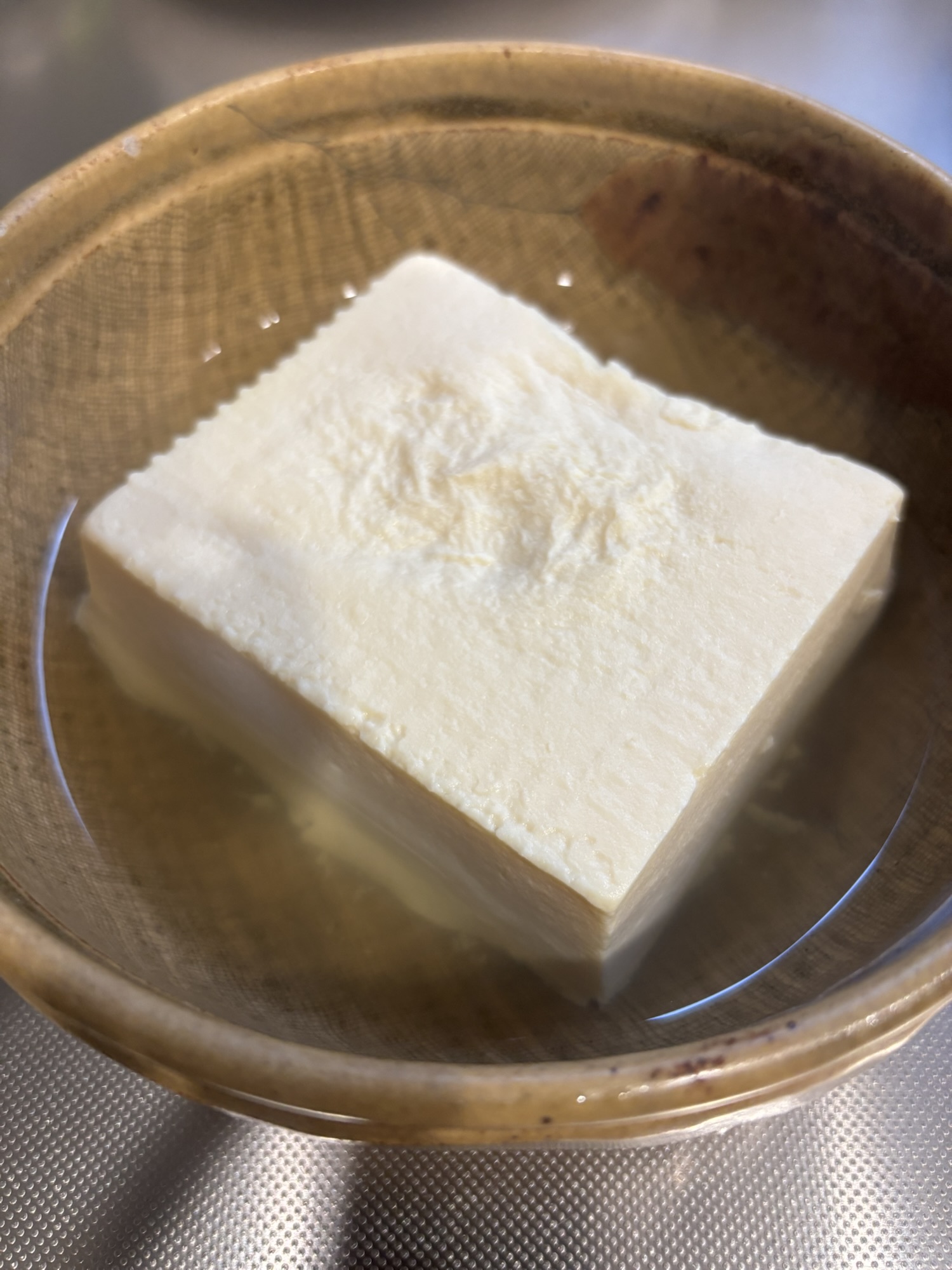
    First, freeze the tofu overnight.

    The frozen tofu overnight
    The frozen tofu overnight

    Once a night has passed, thaw the tofu. You can use a microwave to speed up the process. However, if you use the microwave, it will likely be steaming hot, so make sure to cool it completely before proceeding.

    Step 2: Squeeze and Drain

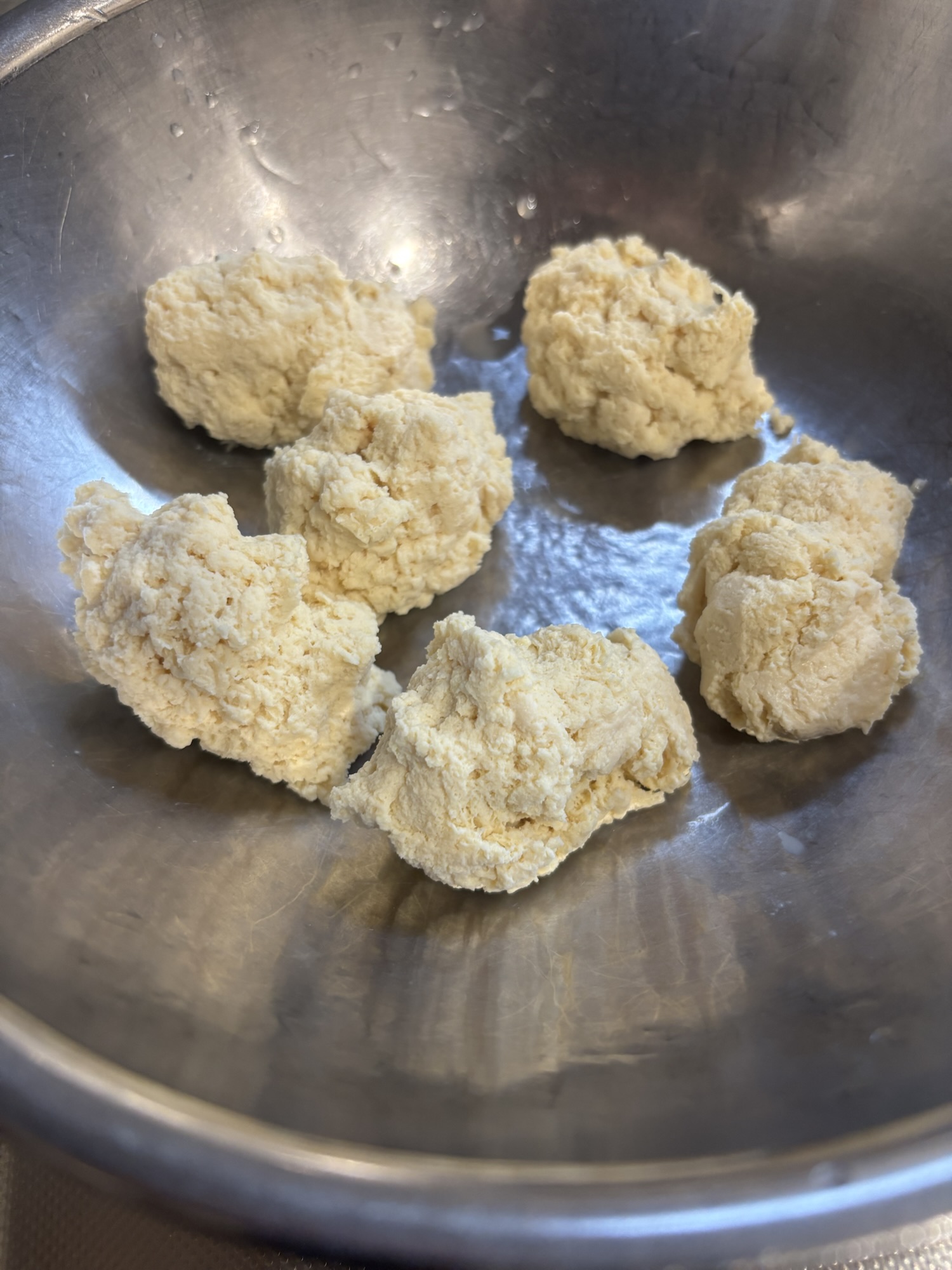
    Cut the tofu into 6 pieces and begin squeezing the water out. It will likely break apart, but don’t worry! Just squeeze it tightly while trying to shape it. Squeeze all the pieces completely until the liquid has been released. Set the squeezed tofu aside in a separate bowl.

    the squeezed tofu
    the squeezed tofu
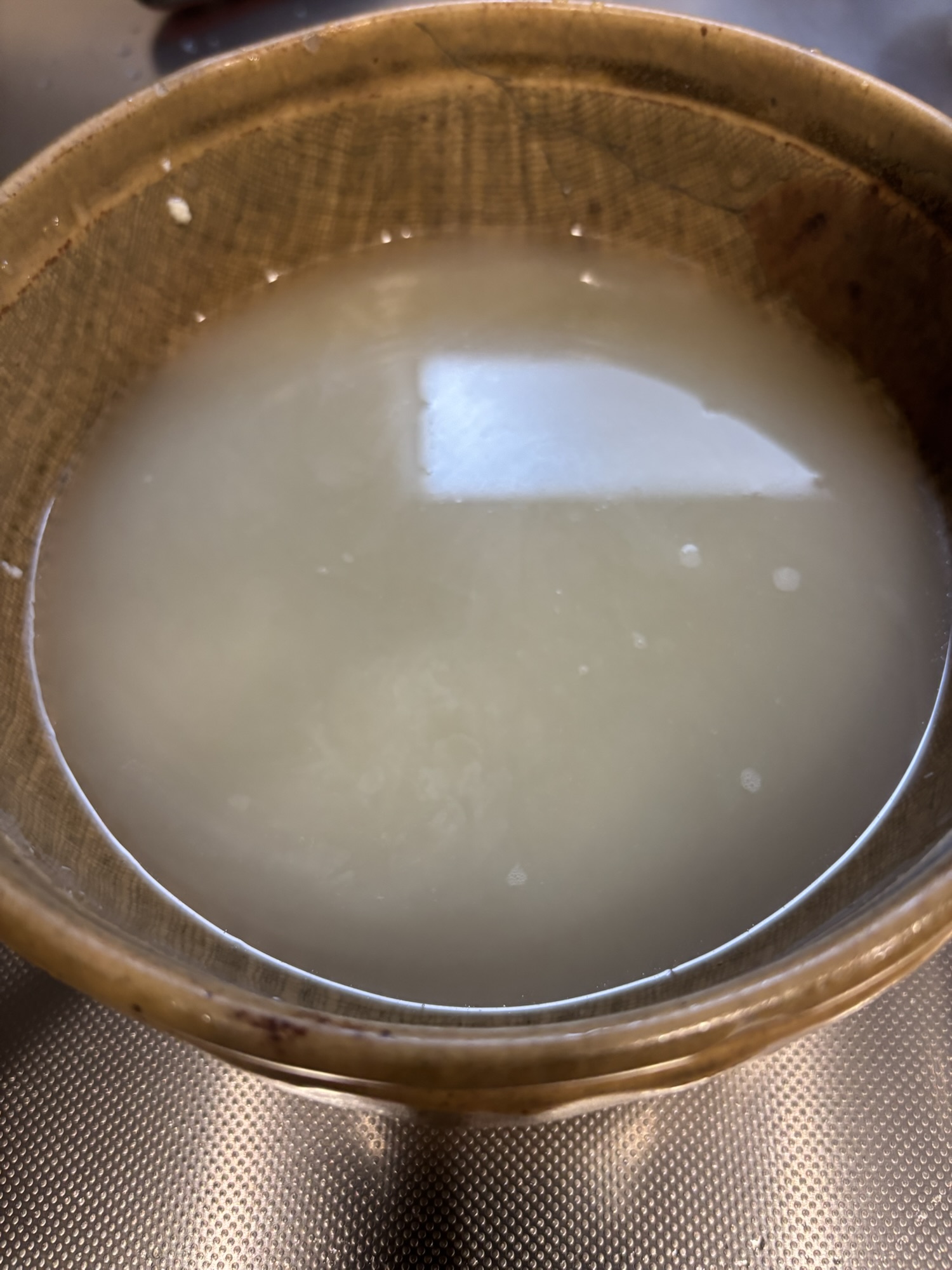
    The water squeezed from the tofu

    The water squeezed from the tofu

    Step 3: Make the Marinade

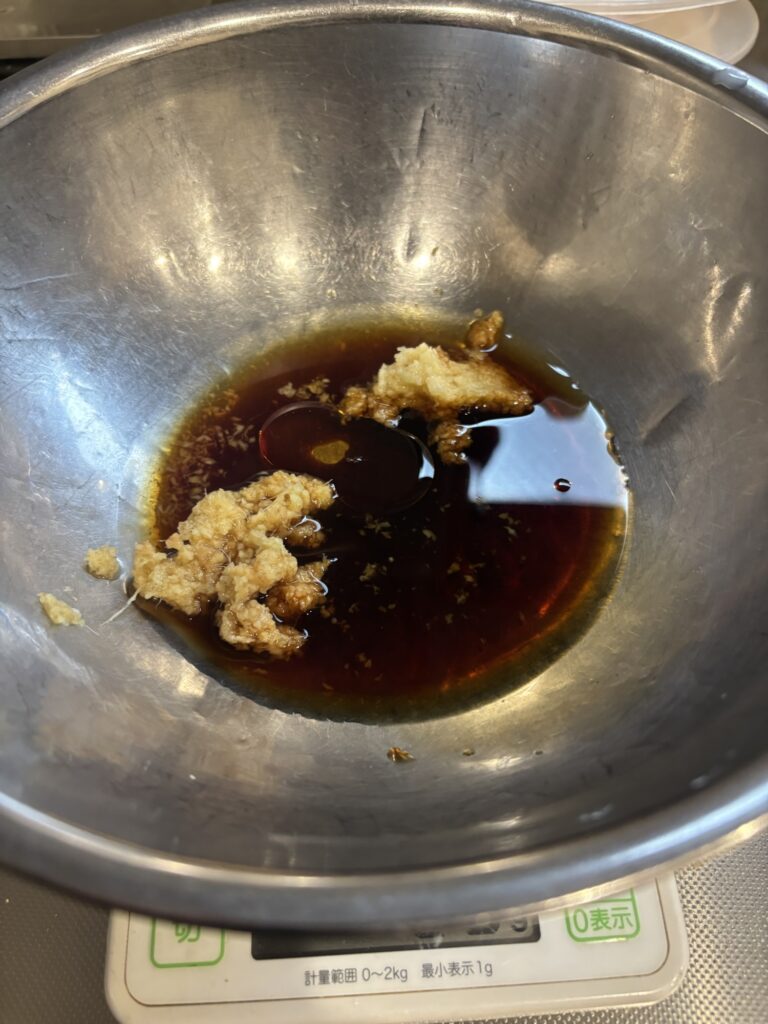
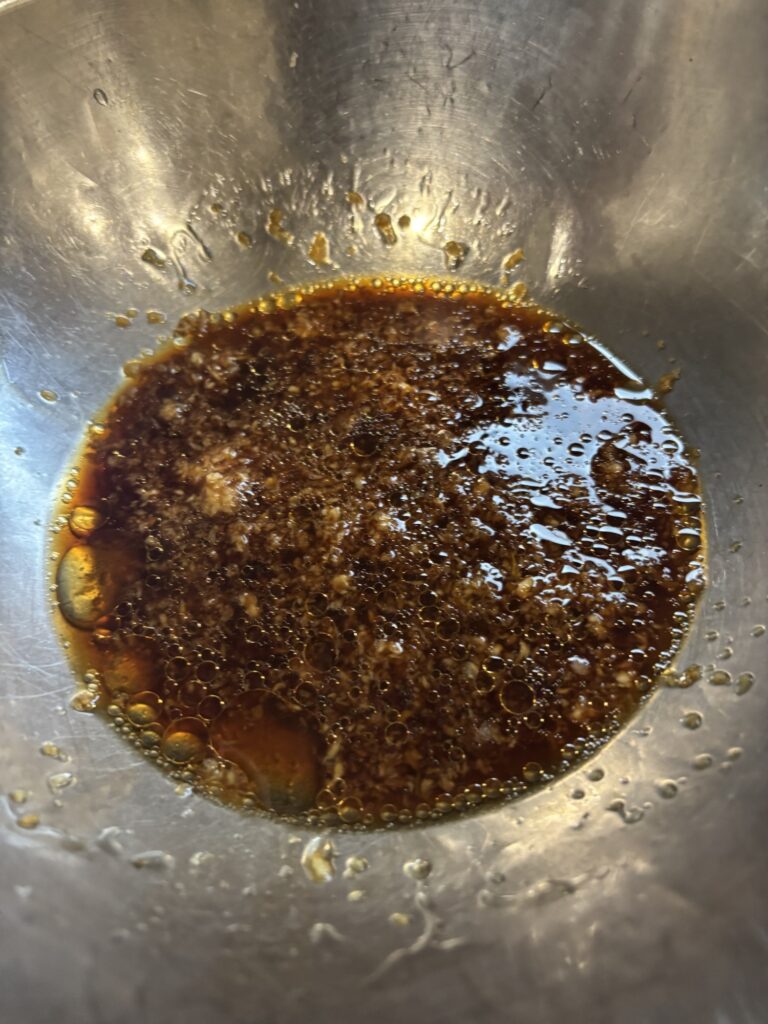
    Next, grate the garlic and ginger. Put the grated mixture into a bowl. Add the soy sauce, cooking sake, and sesame oil, and mix them well to create the marinade.

    To grate the garlic and ginger. Put the grated mixture into a bowl. Add the soy sauce, cooking sake, and sesame oil.
    To grate the garlic and ginger. Put the grated mixture into a bowl. Add the soy sauce, cooking sake, and sesame oil.
    To Mix the garlic and ginger, the soy sauce, cooking sake, and sesame oil.
    To Mix the garlic and ginger, the soy sauce, cooking sake, and sesame oil.

    Step 4: Prepare the Coating and Oil

    Put the rice flour into a bowl. At the same time, start heating the oil. Pour enough oil into a frying pan so that you can deep-fry the pieces.

    Step 5: Marinate and Coat

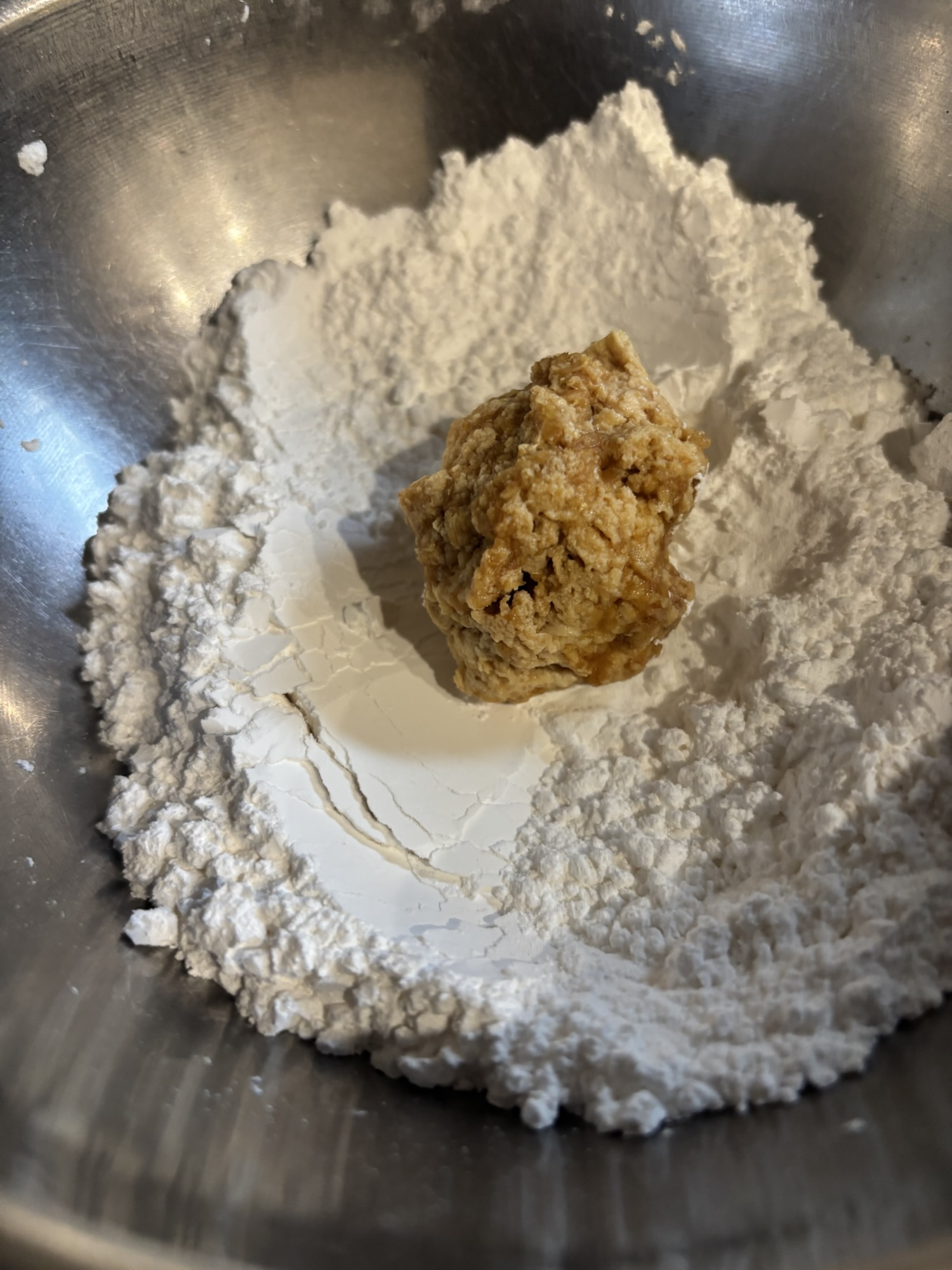
    Now, place the squeezed tofu into the marinade (the sauce with the grated garlic, ginger, sake, soy sauce, and sesame oil). The tofu will likely crumble when you put it in. Since it will crumble, use your hands to scoop up the garlic and ginger along with the tofu, shaping it as you gently squeeze it again. Since the tofu quickly absorbs the soy sauce and sake, gently squeezing it again at this stage won’t make the flavor weak.

    Once you have shaped the piece, immediately put it into the bowl containing the rice flour.

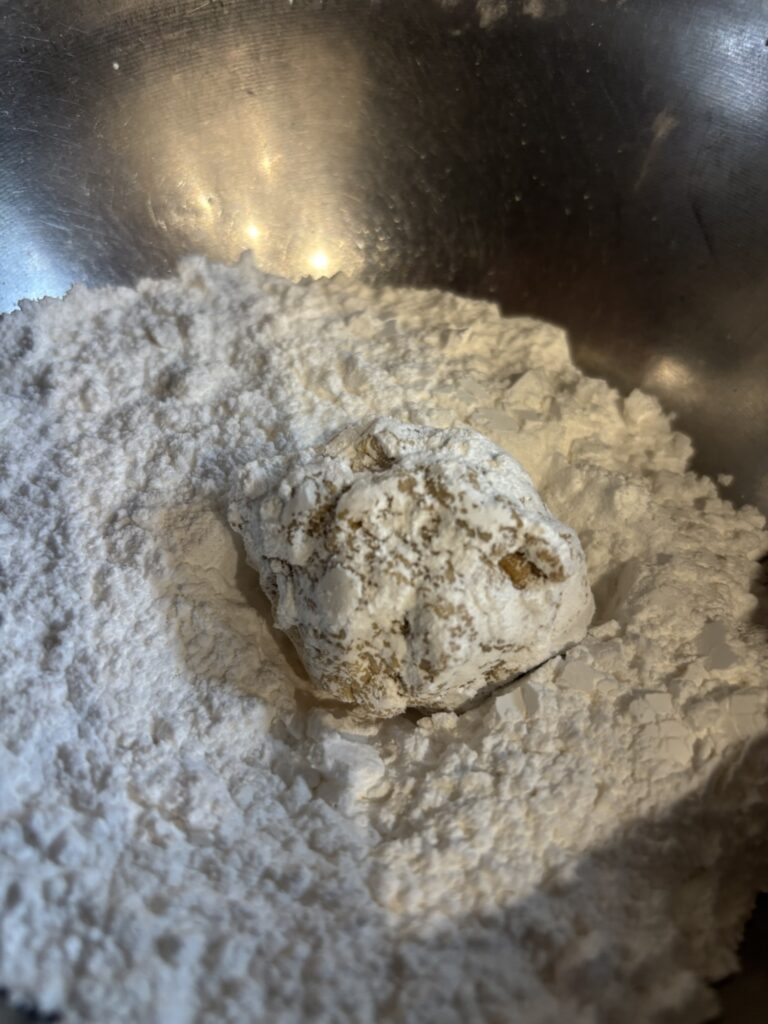
    Once you put it on the rice flour, coat it completely.

    Once you put it on the rice flour, coat it completely.
    To coat it all over.
    To coat it all over.

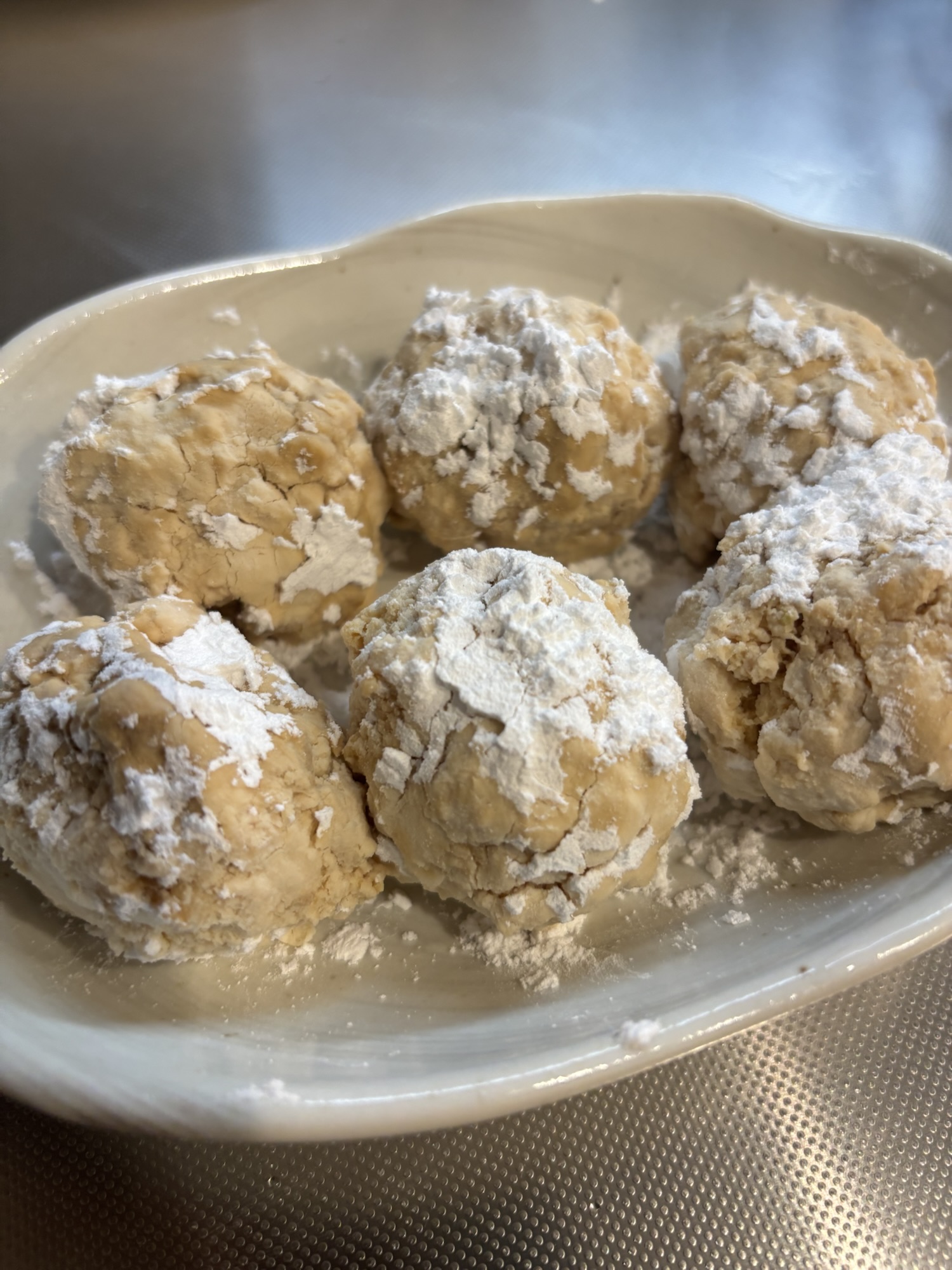
    Important: Do NOT leave it sitting.

    Dive the shaped tofu into the rice flour. Once it’s completely covered in the powder, immediately place it into the hot oil for frying. If you let it sit even for a moment after coating, it will crumble. If it crumbles, it’s impossible to fix, so get it into the hot oil immediately after coating. You don’t have time to take photos!

    If you leave it like this, it will crumble the moment you try to pick it up, so this step is strictly prohibited.

    If you leave it like this, it will crumble the moment you try to pick it up, so this step is strictly prohibited.

    In fact, after Puchiko took a photo, her first batch of Karaage crumbled. She managed to reshape it, but it was a struggle!

    Step 6: Fry to Golden Brown

    Fry the Karaage until it turns a nice golden brown color.

    Step 7: Finish

    Once completely fried, transfer the pieces to a plate lined with a kitchen paper towel to drain the excess oil. And it’s done!

    Hand Made Soy Meat Karaage, It's done.

    Hand Made Soy Meat Karaage, It’s done.

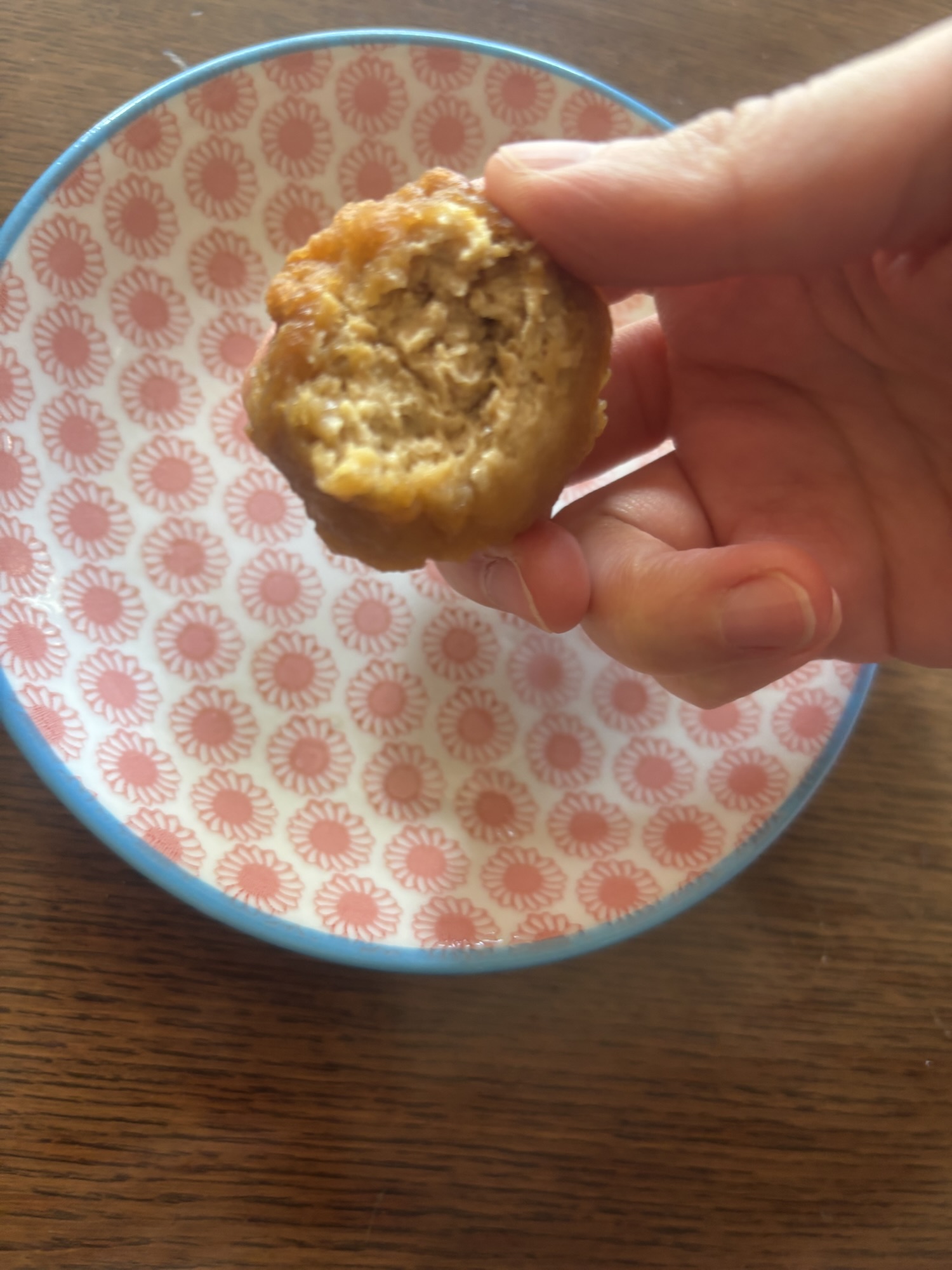
    What do you think? The aroma is incredibly delicious and smells just like authentic Karaage. Since it’s not actual meat, the texture when you bite into it is a bit softer than regular Karaage, and it’s less greasy. But it is delicious! This is the cross-section.

    Cross-section of Hand made soy meat Karaage.

    Cross-section of Hand Made Soy Meat Karaage!

    Puchiko often packs this “Hand Made Soy Meat” Karaage in her bento box. This recipe is great not just for those with renal disease, but also for vegetarians, pescetarians, vegans, and lacto-ovo vegetarians. As long as you don’t have a soy allergy, please give it a try!

  • 【Mental Health】Ultimate Guide to Clinic Stress Relief and Finding Peace in Nature

    【How to Relieve Clinic Stress and Regulate the Autonomic Nervous System】

    1. Why We Can’t Give a Quick Answer to “What Are You Doing This Weekend?”

    When you’re dealing with a chronic illness, you often can’t give a simple answer to a regular question like, “What are you doing this weekend?”

    Looking at Puchiko, she usually paints pictures, mostly motifs of her own organs, when asked what she does on her days off. That’s why she often has trouble answering. She knows what kind of response she’s likely to get if she tells people that, so she always brushes it off with a vague answer.

    Due to the management of her renal disease, Interstitial Cystitis symptoms, and aerophagia during social meals, Puchiko spends her time differently than a healthy person. However, within that restrictive daily life is hidden her own wonderful way of spending her time to protect her mental health and creativity.

    This time, the simple act of “walking in nature” that Puchiko discovered during a break between clinic visits should be the ultimate hint for cutting off clinic stress and regulating the autonomic nervous system.

    2. The “Untraveled Path” Discovered Between Appointments

    Managing Puchiko’s health requires visits not only to Nephrology but also to Urology and Gynecology.

    This time, the Urology appointment for her Interstitial Cystitis finished unexpectedly fast (Puchiko’s condition was good, so it took only one minute! Even I was surprised and laughed). This left us with about two hours to kill before her Gynecology appointment at the next station. (By the way, the medical office assistant at this gynecology clinic is “princess,” a friend of Puchiko’s since high school).

    With two hours of spare time, we decided to visit a park we often go to. The best way to cut off the stress of illness is a “walk in nature.” This is Puchiko’s favorite, and she even made sure to take nature walks during our trips abroad.

    We usually stick to the established paths in this park, but this time, for some reason, we decided to ramble down a path.

    Walking is the most simple and powerful therapy for releasing physical and mental tension and regulating the autonomic nervous system. Well, I’m no doctor, but that’s what I feel.

    While walking, Puchiko suddenly said, “You know, Imaginary Friends are kind of like the lyrics to Nirvana’s ‘Lithium’.”

    Walking down this path served as a switch that forced our minds to change focus. The hospital atmosphere, the consultation details, the anxiety about her illness—the negative thoughts that were swirling in her head instantly seemed to fade away in nature.

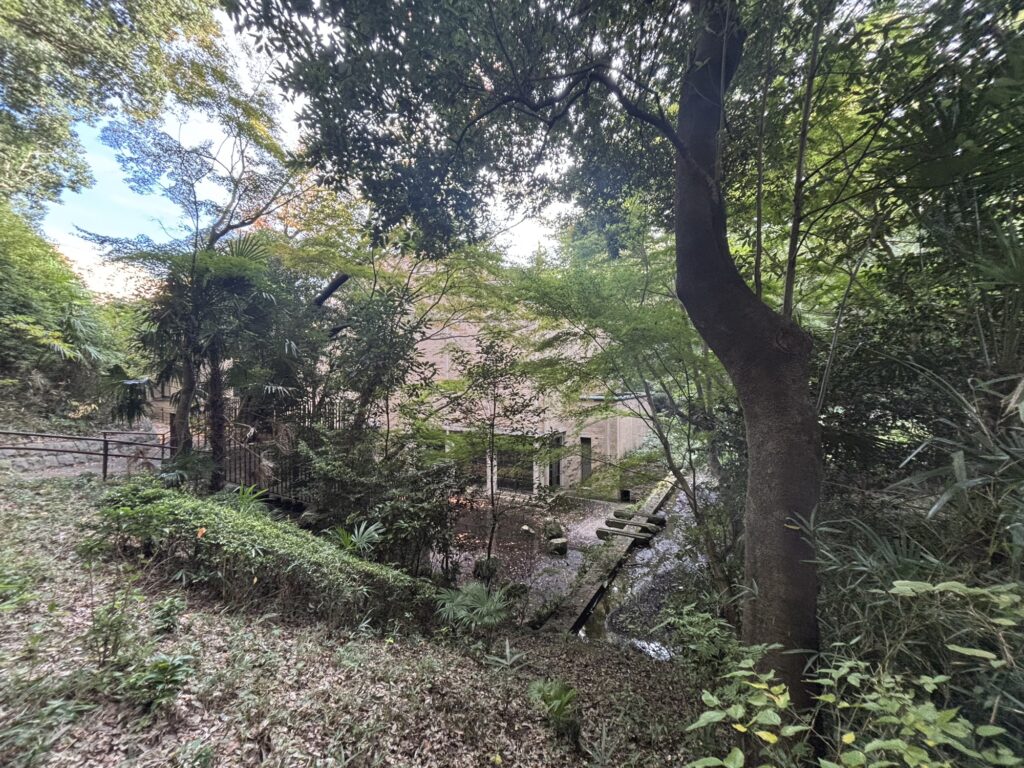
    The visible building is a museum at the park.
    The visible building is a museum.

    After finishing the Gynecology appointment and picking up her medicine, we went home. I felt like we had walked a lot, but it was only about 12,000 steps. Thanks to the right amount of fatigue, Puchiko was able to fall asleep easily that night, even though she had work the next day(Puchiko usually has trouble falling asleep on the night of her days off when she has to go to work the following day.)

    3. The Forest Park: Where We Found Healing and Where the Cats Once Lived

    The walk in the park we took between clinic appointments was certainly a wonderful reprieve for Puchiko.

    It wasn’t just a way to kill time; it was the day after the incident with “The Toxic Friend” (【Toxic Friendship & Chronic Illness】The Arrogance of Talking About “Weak Bodies” in Front of a Sick Friend), and a mental haze had settled over Puchiko’s mind. As her ally, I struggled repeatedly to clear that haze, but I couldn’t and she would seem to shake it off only to start thinking again, causing the fog to return. While she was walking, the haze was still present, but it was thinner.

    However, Puchiko has other parks like this, and they are much closer to home. I don’t mean “imaginary parks”—they are very real.

    This forest-like park is also the place where Puchiko’s three beloved cats once lived.

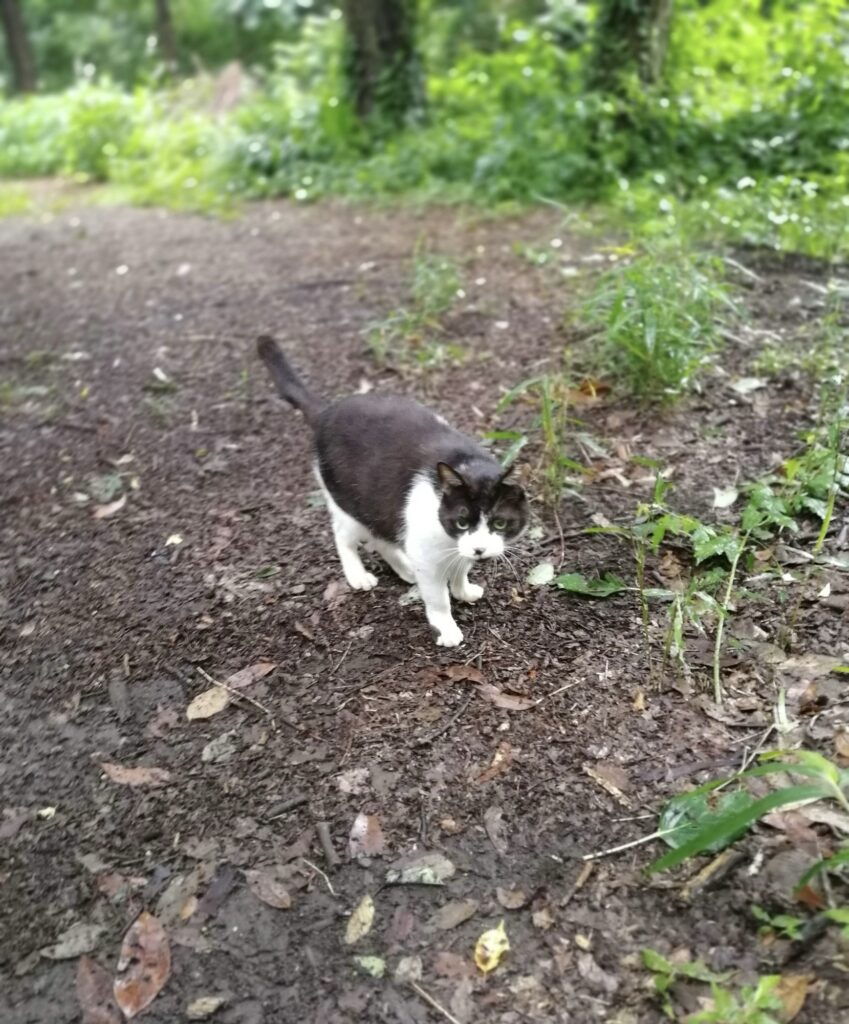
    One of my beloved cats, when he lived in a small forest.

    One of my beloved cats, when he lived in a small forest.

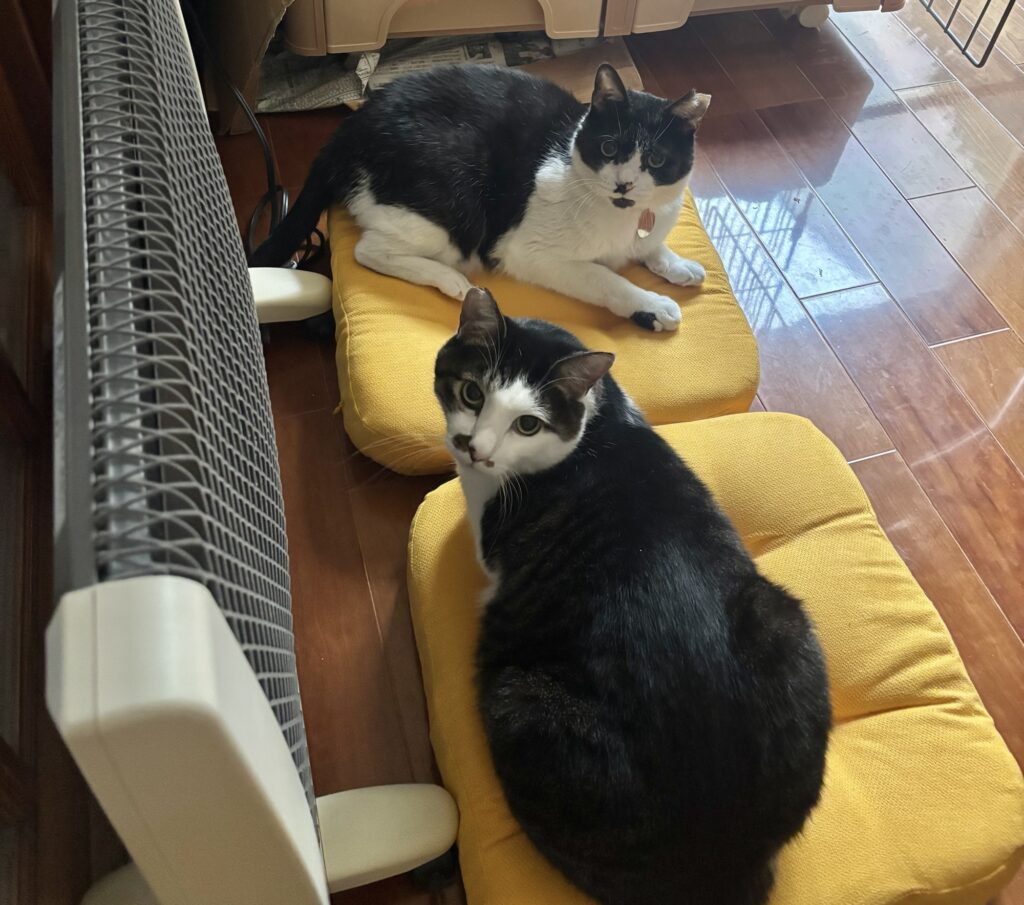
    Puchiko rescued the cats from this park and they spent time with us at home. The third cat, whom we took in just last month last year, sadly passed away from FIP, a highly fatal cat disease, after only three months. I remember Puchiko crying, even while trying to hold back at work. Two of the cats are still living with her now. We had one more cat besides these three, but I will save the story of her beloved cats for another time.

    To return to the main subject: When living with a chronic illness or multiple conditions, it is inevitable to find yourself comparing your current self to your “healthy self” in the past, or even comparing yourself to others. However, by seeing the trees and grass where our former cats played in this park, Puchiko feels those happy memories of the past transform into mental energy for living in the present.

    A walk in this “small forest” is not just exercise. It is our most precious “pilgrimage site” for washing away stress and quietly restoring mental health. It is why She will probably continue to live in this area, no matter how much money she earns or whatever else happens.

    4. Illness Restricts the Body, But Never the Freedom of the Mind

    The events of this single day—the stress of clinic visits, dealing with the aftermath of toxic relationships, the unexpected walk down a path,” and the nostalgic visit to the small forest that was once our cats’ home—gave Puchiko some crucial TIPs (Tools for Inner Peace).

    Chronic illness imposes endless restrictions on the body, forcing us to dedicate time to symptom management and treatment. Yet, the most vital space in our lives—the freedom of the mind and heart—remains entirely ours.

    The simple act of walking—whether it’s on a new road or in a park filled with dear memories—is the most accessible, non-pharmacological way to resolve clinic stress and restore the autonomic nervous system.

    This is why Puchiko’s unique activities, such as her organ art and finding solace in nature, are so crucial. They are her own powerful tools for asserting that, while the body may be restricted, the spirit is unconditionally free.

    For everyone else fighting the daily burdens of chronic illness, remember this: The fight is exhausting, but finding your own “forest park for the soul” is the key to protecting your mental health and finding peace in the present moment.

    When you’re feeling low, or lost in worry, step outside and try a walk! This is the Ultimate Guide to Clinic Stress Relief and Finding Peace in Nature for Puchiko.

  • 【Toxic Friendship & Chronic Illness】The Arrogance of Talking About “Weak Bodies” in Front of a Sick Friend

    Puchiko went out to meet people, which is rare for her. What I am about to write about made me furious as someone close to Puchiko, and I will refrain from mentioning names or other identifying details because I won’t write kindly about that person. Puchiko herself felt slightly bothered, but after returning home, she was watching Poirot quite cheerfully, so she didn’t seem to mind… or rather, she wasn’t paying them any mind. However, I felt such anger toward that person that I told Puchiko, “Don’t ever associate with them again.”

    I felt such anger toward that person that I told Puchiko, “Don’t ever associate with them again.”That incident only solidified my core belief: For me, Puchiko’s health and treatment come first, above absolutely everything else.

    Living with a chronic illness means that not only your body, but your mental energy is constantly being drained. That’s why it becomes necessary to clear out the toxic relationships from your life. It’s something I wish I didn’t have to do, but I made the decision. For me, Puchiko’s health and treatment come first, above absolutely everything else.

    Living with a chronic illness means that not only your body, but your mental energy is constantly being drained. That’s why it becomes necessary to clear out the toxic relationships from your life. It’s something I wish I didn’t have to do, but I made the decision.

    “The toxic friend” who will appear in this story had once made a joke out of Puchiko’s facial expressions and symptoms when she was suffering, and they did this right in front of our mutual acquaintance. This was done even though Puchiko was right there. I was standing just behind her to the left when I heard it, and I felt intensely disgusted. I couldn’t understand the nerve of someone who would mock a person for being unwell.

    I realized with absolute certainty that the sheer discomfort and stress from that person was nothing but poison to Puchiko’s recovery and health management. And so, I made the decision: “I will completely distance Puchiko, and myself, from this toxic environment.”

    Through this episode, I want to explain why “decluttering your relationships” is just as crucial as medical treatment for people living with a chronic illness.

    1. The Discomfort of Trivializing a Shared Acquaintance’s “Weakness” While Knowing Her

    What shall I call that person? Let’s call them “The toxic friend.” The relationship with “The toxic friend” has been simmering for a long time. They are someone who stimulates a deep-seated aversion in Puchiko. Since they belong to the same social circle, they occasionally have to interact.

    “The toxic friend” started talking about a mutual acquaintance of Puchiko’s who suffers from mental health illness. Though they must have known about the person’s condition, “The toxic friend” proceeded to say, “People with weak bodies are hard to invite out,” “You can’t do any job without being healthy and physically strong,” and “It gets awkward and takes too much care when you know too much about their illness.”They stated this as if intentionally disregarding the other person with a weak body (Puchiko) right there, or as if they were doing it deliberately.

    I wonder what “The toxic friend” truly thought of Puchiko’s five years of living with illness. Puchiko listened without showing emotion, like Michael Corleone, but if she had commanded me to “kill them,” I might have done it. It is impossible, of course. That is the sad fate of an imaginary friend.

    “The toxic friend” voluntarily follows Puchiko’s social media accounts dedicated to her illness, knowing full well about her struggle and dietary restrictions. Why, then, would they say such things in front of her? If they feel that way, why did they seek to associate with her in the first place?

    To make matters worse, “The toxic friend” had once made a joke out of Puchiko’s facial expression and symptoms when she was suffering during an outing, and they did this right in front of our mutual acquaintance.

    2. The Arrogance of Hurting Others and Erecting a “I Am Special” Defense Line

    Even after more than 15 years, Puchiko has not forgotten a phrase “The toxic friend” uttered. When Puchiko’s father resigned due to depression, “The toxic friend” said, “My own father crushed people like that, though.” And today, they were making a joke out of another weak person right in front of us.

    Puchiko chose the “adult” response toward “The toxic friend.” She knows that trying to correct or argue with “The toxic friend” is futile, as “The toxic friend” will only attempt to win the argument, which would be detrimental to her own mental health. Borrowing “The toxic friend’s” past phrase, “There is only right or left in the world,” this unknowingly flawed perspective is likely a manifestation of a deep-rooted self-defense mechanism that cannot neutrally respect others.

    Even if “The toxic friend” maintains an appearance of a “successful person” through sheer vanity, promoting their job as superior and masking the reality that their current office is only sustainable through parental support.

    Neither Puchiko nor I need to crush “The toxic friend’s” façade. The strength we must possess is not about controlling people like “The toxic friend,” but the wisdom to respect our own feeling of “dislike” and maintain distance. Puchiko’s small, daily peace should not be destroyed by the arrogant remarks of someone like “The toxic friend.”

    By the way, when Puchiko finished watching Poirot, I asked her, “Why are you okay after being told those things on your precious day off? Aren’t you angry?”

    Puchiko replied, “I was angry. Or rather, I just reconfirmed that my initial gut feeling when I first met this person—that I couldn’t stand them—was correct. Besides, you were the one who completely freaked out and blew up more than me, you, so watching you rage actually made me feel relieved. Thank you.”

    3. TIPs for Puchiko’s Comrades Living with Chronic Illness

    There will always be people like “The toxic friend” who try to inflict deliberate pain. When Puchiko was hospitalized for her renal disease treatment, a colleague referred to her desk as “the sick island.” Others may utter hurtful words with good intentions, or introduce unwanted information during your struggle.

    What I have learned from watching over Puchiko is that the strength we must possess, to reiterate, is not to fix people like “The toxic friend,” but to respect our own feeling of “dislike” and maintain distance.

    And there is one more thing I want to convey to the reader. Never, ever discuss your personal passions or things you love with “The toxic friend” type of person.

    For them, it merely becomes “bait” to attack your vulnerability or joy. When your favorite things are denied and met with mockery like, “You like that much?” it can deeply wound you, feeling like an assault on your very core. This is because Puchiko was once subjected to this by “The toxic friend.” Puchiko’s small, daily peace must not be destroyed by the arrogant words of people like them.

    You Might Also Like

  • 【Puchiko, Stressed and Teased by a Conditional Job Offer】 Balancing Chronic Illness and Work

    ※This is Puchiko’s experience and is not a substitute for diagnosis or treatment.

    Puchiko seemed to have a good day yesterday. This is because she went to her favorite Sicilian restaurant with her parents. After eating her beloved oyster pasta, a dish she always orders at this place, she looked perfectly content. Seeing her from behind, I felt a sigh of relief.

    This is because, just 3 days prior, Puchiko had received a Conditional Job Offer. It was back in June that Puchiko had applied for the employment exam.

    As you know, Puchiko carries various chronic illnesses, primarily renal disease. Although she is currently in remission, there is always a risk of relapse if she catches an infection like a cold, influenza, or COVID-19. If that happens, she may need to be hospitalized again for steroid pulse therapy (【Steroid Pulse Therapy Renal Disease】Mischievous Steroid 5 Difficult Lessons from Puchiko’s Experience), forcing her to endure the side effects she overcame after a year: moon face, depression, and easy susceptibility to infection. As her ally, I want to prevent that.

    However, in life, anything can happen. It’s unrealistic for Puchiko, in her mid-30s, to believe she will never catch such an infection until her death. If she does contract one, or if the 37% of her glomeruli already dead from renal disease cause her kidney function to progress for the worse, it’s entirely possible. What would happen if this woman, already burdened by many chronic diseases, suffered from another serious illness? During her hospitalization for steroid pulse therapy for renal disease, she was told that future necessary medication would affect potential pregnancies, and she cried bitterly in the hospital ward. Since she received a friend’s birth announcement on the very day she was told that, it was truly heartbreaking to witness. She must have thought, “Why me?” While she never particularly wanted children, having her options reduced was probably painful for her. Although she had already decided she didn’t need romance or marriage, that event solidified her resolve.

    Puchiko’s immediate family consists of her parents and younger brother. But her parents will pass away before her. She becomes anxious when she thinks about being alone in her old age. She has a job, and to avoid losing it, she obtained qualifications as a certified professional and a Japanese language teacher. She currently works as a part-time specialized occupation worker, working just over 7 hours, 4 days a week. Since her employment is part-time, her contract must be renewed every year, but it terminates after 3 years. Each time, she must reapply through an organization call and go through an interview with other candidates. Some employees who previously worked there have failed to be rehired. If the project she is working on changes, her contract may not be renewed, resulting in unemployment. Unfortunately, the number of clients is drastically decreasing, and it is anticipated that she may lose her job someday. There is no severance pay. Furthermore, while she is granted a few days of sick leave, if she exceeds that limit, she will lose her job. In other words, a major illness means unemployment. When she is old, she will have no spouse or children to rely on. That is why she wants to save money and solidify her insurance—to secure her own future.

    2. Why Puchiko Didn’t Apply for Permanent/Full-Time Positions

    So, why hasn’t Puchiko actively sought stable, full-time employment until now? She has tried. But when she mentioned her renal disease, she was rejected. (She past some job interviews but she didn’t disclose the facts.) This was true even when she emphasized that she was in remission. If she had diabetes, which also involves kidney issues, employers might be more willing to hire her because many people imagine someone working with diabetes—and indeed, several such employees work in her current office. But this renal disease is a disease many people have never heard of and is designated as an intractable disease in Japan, leading to unwarranted avoidance. Some might suggest she simply hide her illness during the interview. But it’s not that simple. When applying for full-time or permanent positions, she is required to undergo a health check-up once she receives a job offer. In the end, the truth comes out.

    In Japan, there is a disability employment system for those with a disability certificate, allowing them to receive accommodations at work. However, Puchiko, being a chronic illness patient in a limbo state—neither disabled nor fully healthy—does not qualify for this system. Puchiko’s renal disease was actually discovered during a health check-up after she joined her current workplace. Therefore, her colleagues know about it, and they see she can work without issues, which is why it doesn’t affect her contract renewal.

    3. Puchiko Decides to Take the Challenge

    As the 3 year mark approached since her last contract interview at her current workplace, Puchiko decided to apply for a civil service exam at a certain municipal office instead of waiting for another application for her current position. She had been in remission for a year without any issues. She felt she could pass the health check-up in her current condition. She had been debating taking the civil service exam for about 5 years since she started her current job, agonizing over whether to take it.

    The reason is that Puchiko’s only viable path to victory was to compete for a professional position. At her age (mid-30s), she had to leverage her experience to survive an exam where new graduates are her rivals.

    Puchiko is also keenly aware that the this field is tough and demanding. It is likely that if hired, she would be assigned to the department—the department most employees at a municipal office would dread. It is notoriously grueling, understaffed, and a typical environment where employees suffer mental health issues, leading to resignation or extended leave. Most citizens live modestly, but a small fraction—the handful of citizens who engage in customer harassment, who are aggressive, or who are ex-yakuza—inflict stress that breaks the staff. Although she doesn’t know if this particular municipal office is like that, this is a well-known reality in the welfare industry. She witnessed this reality firsthand in her previous job. The question is whether such a high-stress, overtime-heavy environment is bearable for someone with multiple chronic illnesses. In fact, her father, who was in an administrative role at that very municipal office, developed depression and took early retirement. The fact that he lasted decades there is impressive, given how challenging it is. Although it likely depends on the specific job duties, the reality is far removed from the overly optimistic image the public holds.

    Despite all this, Puchiko decided to take the exam for the sake of the benefits. The risk of unemployment would be lower, allowing her to dedicate herself to hospitalization and treatment without worry. The salary for a professional is good. And it would reassure her parents. These benefits are the oasis that she seeks.

    4. From Application to the Conditional Job Offer

    Puchiko applied for theemployment exam. First was the document screening, which was likely just a confirmation of eligibility and checking for typos. This narrowed the field to twelve candidates. Then she took the written exam .

    Next was the first interview. During the interview, she was asked, “This is not directly related to employment, but do you have any illness we might need to hospitalize?” When she asked “Hospitalization?” in return, the interviewer said, “Something like an illness that requires 1 month of hospitalization.” Puchiko thought to herself, “True, my renal disease treatment involved 3 separate hospitalizations for 10 days each—for the kidney biopsy, tonsillectomy, and steroid pulse—but they were all separate, and I didn’t take a full month off at once. My doctor even said it wouldn’t affect my work…” She replied, “No.” She didn’t feel she was lying. She passed those exams.

    Puchiko went on to the final interview. The questions heavily focused on topics like “How do you relieve stress,” “When do you feel stressed,” and “How do you handle problems at work.” She realized, “There are indeed people here who suffer from stress and mental illness.”

    The result of the final interview was sent by mail. The result was “Passed.” However, it wasn’t a definitive “Hiring” but a conditional notification: “There is a possibility of employment within 11 months, but only if a person resigns or is no longer able to take the position.” I shouted, “Is that even a thing?!” Although the letter said “Passed,” it was essentially an “Alternate” position. In other words, if no vacancy arises during that time, she won’t be hired. I was worried about her state of mind.

    5. Puchiko’s Reaction After receiving the Conditional Job Offer

    Despite the result being “effectively an alternate,” Puchiko seemed less bothered than I had expected. Perhaps she was slightly relieved somewhere deep down, knowing how demanding and difficult working as a full-time civil servant professional can be. The questions about stress tolerance and mental health in the final interview had convinced her of the intensity of the job.

    As mentioned earlier, Puchiko lives with the anxiety of not knowing when her illness might flare up and require hospitalization. If she works part-time, there is a risk of losing her job during a long hospitalization. However, she doesn’t qualify for employment under the disability hiring system. She also doesn’t have the stamina to work full-time and healthy. She had told me that, being single and considering her physical condition, she wouldn’t have children, and she wanted to earn a little more money to live alone in her old age with this condition. The truth is, people with intractable diseases are often in a limbo within society.

    That is why, a year after her renal disease went into remission, she took the full-time employee exam. She wanted to reduce the risk of losing her job even if hospitalized. However, she was also aware that the job would be extremely demanding and involve significant stress.

    If the result had been “Hired,” Puchiko would have readily accepted the position without a second thought. If it had been “Rejected,” she would have given up and reapplied to her current workplace. But this middle ground means she will continue to struggle with the decision: “What should I do… it’s too much stress… but the benefits are so appealing…” This is exactly where she is now.

    Amid all this, yesterday was a “cheat day” for Puchiko. She usually maintains a restrictive diet, but a cheat day is when she can freely eat what she likes. When a person is feeling low, even the most delicious food can seem tasteless, but she was genuinely enjoying her meal yesterday. Watching her laugh and spend time with her parents warmed my heart.

    While eating, Puchiko mentioned to her parents, “When I have work-related worries, even if I’m eating delicious food like this on my day off, I lose my appetite and can’t enjoy it. I think I would be happier in a lower-paying, unstable employment where I can still savor my food and enjoy my time. If a staff member resigns and they call me with an offer, maybe I should decline it.” It is a difficult decision.

    By the way, Puchiko is planning for 2-week trip to Belgium in March of next year, 4 months from now. She has already made all the reservations. She said, “What if they call me with an offer while I’m in Belgium? I won’t be able to answer the phone!” While it’s not entirely impossible to answer the phone, I agreed that the timing would be terrible if the call didn’t go through. But worrying about that phone call—does that mean she still holds onto a thread of hope for the job?

    Postscript: Developments Since Then

    This morning, just after 9 AM, Puchiko’s smartphone received a call. However, she was washing her face and didn’t notice it. I immediately told her that she had just received a call. She hurriedly grabbed her phone. Looking at the number, she had a hunch.

    The reason was, as I wrote in a previous script (1. Puchiko’s Job-Related Anxiety, 2. Why Puchiko Didn’t Apply for Permanent/Full-Time Positions), she had taken an employment exam and received a passing notification, but it wasn’t a direct job offer. It was a conditional job offer, meaning she would only be hired if someone resigned or retired. In essence, it was a waitlist acceptance. She immediately thought that this call might be the job offer following a resignation or retirement, fulfilling the condition of the conditional offer.

    When Puchiko called back, it was indeed the job offer based on the conditional acceptance. The content was, “We would like to hire you.”

    As also mentioned in this (1. Puchiko’s Job-Related Anxiety, 2. Why Puchiko Didn’t Apply for Permanent/Full-Time Positions) , she had initially been relieved that the result was merely a “passing notification” and not an “employment notice.” This was because she was fully aware that the job was extremely demanding and stressful. Even with good pay and benefits, she knew a hellish period awaited her—so bad that her current workplace would feel like heaven in comparison. She couldn’t bring herself to fully commit.

    However, the call came much earlier than Puchiko had anticipated. She had thought she might receive a call about the conditional offer in December, March, and June. Why December and June? Because she assumed people might resign after receiving their bonuses.

    In any case, because she received the offer much earlier than expected, she wasn’t mentally prepared. She responded without much thought, almost by a spinal reflex. “I will gladly accept,” she replied. I thought, “Seriously?”

    But she is the one who will actually be working, not me. I know full well how much she has agonized over this, as stated in this (1. Puchiko’s Job-Related Anxiety, 2. Why Puchiko Didn’t Apply for Permanent/Full-Time Positions) . All I can do is support her. The representative then said, “We will send the necessary documents again,” and she replied, “Thank you, I look forward to it,” before hanging up.

    After ending the call, she thought, “Was this the right choice? Did I truly make the right decision?”