※This is Puchiko’s experience and isn’t a substitute for diagnosis or treatment.
I imagine some of you might be wondering, “What on earth is Steroid Pulse Therapy renal disease?” when the term suddenly appears. I, too, hear the word “steroid” often enough that it feels familiar (from steroid-containing ointments, etc.), but when Puchiko was researching renal disease treatment, I wondered, “What exactly is a Steroid Pulse?” Based on what I’ve witnessed through Puchiko’s experience, I will explain why Steroid Pulse Therapy renal disease is administered.
Table of Contents
1. Why Do We Use Steroid Pulse for Renal Disease?
The reason for Steroid Pulse Therapy renal disease is their powerful ability to suppress inflammation caused by the immune response. In her renal disease, the body’s immune system overreacts, causing inflammation in the kidney’s glomeruli (the part that filters the blood). If this inflammation persists, kidney function gradually declines, risking progression to renal failure in the future. Steroids suppress immune function and quell inflammation, offering expected benefits such as:
• Improving hematuria and proteinuria.
• Preventing the deterioration of kidney function.
Steroid pulse therapy, in particular, aims to rapidly suppress inflammation by administering a high concentration of steroids over a short period, minimizing damage to the kidneys. Steroids are used not only for her renal disease but also for various other renal diseases (like nephrotic syndrome), cancer treatments, and collagen diseases.
2. Steroid Pulse Therapy Renal Disease Treatment Details
However, Steroid Pulse Therapy for renal disease have a mischievous personality, causing side effects. Thus, they must be used appropriately under a doctor’s guidance. I will discuss the side effects Puchiko experienced later in “4. About Side Effects.”
Steroid pulse therapy involves the intravenous administration of a high-concentration steroid (methylprednisolone). It is typically administered for three consecutive days to rapidly quell the inflammation in the body. Since blood sugar levels rise during steroid treatment, whether administered intravenously or orally, blood sugar is measured after every meal during hospitalization. If the reading exceeds 200, insulin is administered.
3. Number of Steroid Pulse Therapy Renal Disease Treatments
Usually, a steroid pulse consists of one 3-day set, or one course. Based on the doctor’s judgment, Puchiko received three courses of treatment:
3 days of IV drip (1st course) \rightarrow 3 days of oral medication \rightarrow 4 days of IV drip (2nd course) [Up to this point was during hospitalization] \rightarrow 3 days of oral medication \rightarrow 3 days of IV drip (3rd course) \rightarrow 1 year of oral medication with gradually reduced dosage.
The reason for taking oral medication with a reduced dosage for a year is that the massive dose of steroids causes the adrenal glands—which normally produce the steroid substance cortisol—to go on hiatus.
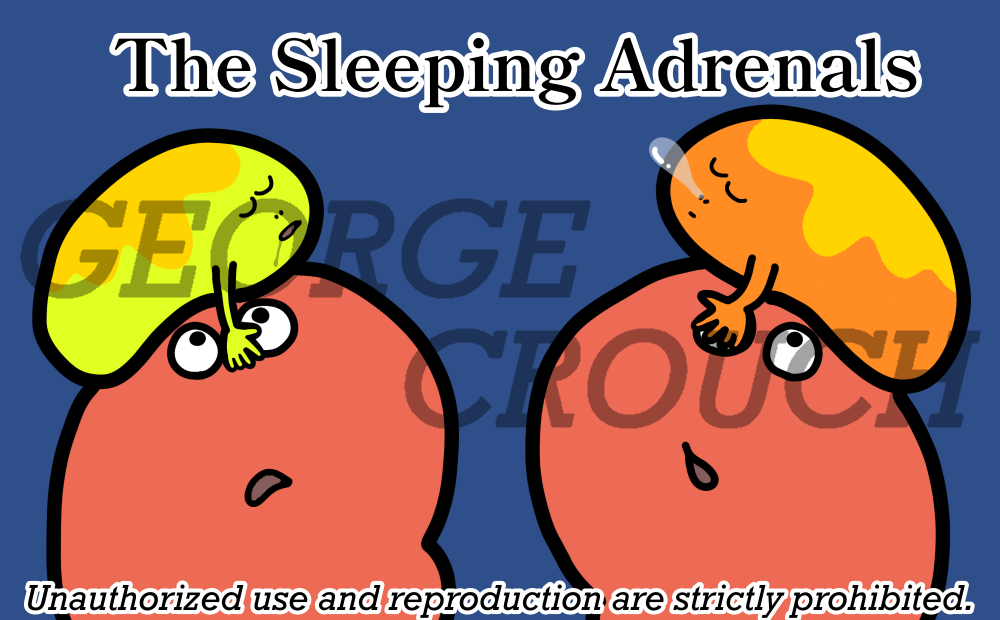
When a large amount of steroid enters the body, the adrenal glands, no longer needing to produce their own, fall asleep.
Therefore, abruptly stopping the medication can upset the body’s balance, leading not only to nausea and headaches but also to dangerous symptoms. You should always inform your dentist, for instance, about your steroid treatment and show them your medication record book. The same goes for any surgery where your body will be under stress.
4. About Side Effects
While steroid pulse therapy is effective, Puchiko also experienced the mischievous steroid’s side effects. Here are the specifics:
⑴ Face Swelling (Moon Face)
Moon face is worrisome, isn’t it? Whether people know about your illness or not, you don’t want them to comment on it, and you certainly don’t want rumors like “They gained weight” or “They look swollen.” It’s stressful to have this visible side effect when you’re already concerned about people saying unnecessary things.
The conclusion regarding Moon Face is that Puchiko was one of the people who didn’t experience it severely. She herself felt like, “Ah, my cheeks got bigger,” but others didn’t notice it. This wasn’t because people were being considerate; it was genuinely minor. Puchiko’s mother only commented, “Ah, you look a bit plumper.” However, when Puchiko’s grandmother—who didn’t know about the illness—saw her after a long time, she said, “Look at the flesh on your shoulders! You’ve gained weight.” (Puchiko was later fed up with these kinds of conversations and told me, “I want to go home.”)
George’s TIPs for Steroid Pulse
Compared to others (those who share photos online), Puchiko didn’t experience Moon Face severely. While it’s hard to prevent completely, Puchiko—due to her kidney disease—requested nutritional guidance during her hospitalization. She told the registered dietitian she wanted a diet that would prevent blood sugar spikes while taking Prednisone (oral steroid) but not cause weight loss (because losing weight would lead to stricter protein and salt restrictions). She was taught calorie counting, timing her meals, and avoiding snacks. (Though she had been managing her diet, she wanted to specifically avoid blood sugar spikes and Moon Face.) Her strict avoidance of snacks might have contributed slightly. During steroid treatment, the appetite can surge to a point where you feel like you could eat everything, so you must endure the temptation to overeat.
⑵ Emotional Instability
Steroids can cause emotional instability. Puchiko experienced sudden irritation and increased tearfulness, making support and understanding from family and others crucial. Other people’s casual comments, encouragement, and even social media—things that don’t bother you when you’re healthy—can become toxic when you’re on steroids.
For example, this happened during her steroid pulse hospitalization: the amount of proteinuria wasn’t small enough to be cured by steroids alone. That was the context when Puchiko, who rarely cries, burst into uncontrollable tears during her steroid pulse treatment. I mention this to let others know they are not alone.
Especially important: have you had past experiences—even when you were well—where someone said something like, “Why would you say that?” If people have hurt you with their words in the past, do not go near them now. They might not have malicious intent, but if their words hurt you, it’s best to keep your distance. If they are subconsciously doing it, it’s even more troublesome. Maintain physical distance. Exchange greetings if necessary, but avoid meeting them or interacting beyond that. The same applies to the workplace. Heartless people exist. Limit interactions to greetings, and if they try to strike up a conversation, naturally escape—pretend to be busy. That’s how Puchiko protected her mind.
Also, avoid checking other people’s social media. She set those accounts to be hidden because she found herself comparing her situation to theirs unnecessarily. She also turned off comments on her own posts, as she didn’t want unnecessary comments and was too tired to pretend to be cheerful.
George’s TIPs for Steroid Pulse
The reason you feel down during steroid treatment is that the steroids affect the hypothalamus. There is a physiological reason for it. If you feel depressed, inform your doctor; they can sometimes prescribe medication for mental health support. Also, walking for 15–30 minutes within two hours of waking up promotes serotonin secretion, which is good for mental health.
⑶ Insomnia
This was a constant issue during hospitalization. On the first day of the steroid pulse, she even had a phantom smell of baked sweet potatoes while sleeping. She was prescribed a low-dependency sleeping pill called Dayvigo during her stay, but she still couldn’t sleep. This was likely less due to the steroids and more due to various factors in the large shared room. A woman next to her (who had nephrotic syndrome) during the kidney biopsy hospitalization was constantly complaining of sleepiness during her steroid pulse. So, it varies by person. Puchiko continued taking Dayvigo after discharge while the Prednisone dosage was still high. As the amount of Prednisone decreased, she was finally able to sleep better.
George’s TIPs for Steroid Pulse
Don’t forget earplugs and an eye mask when you are hospitalized in a shared room for the steroid pulse!
⑷ Bone Density
Other comrades with the same illness were prescribed medication for bone density during steroid treatment. Puchiko was not, but her bone density still decreased.
⑸ Increased Susceptibility to Infection
Puchiko did her research before the steroid pulse hospitalization. She stumbled upon an old paper about a woman in her 50s who died from an infection during renal disease steroid pulse treatment about 20 years ago. This made her extremely anxious, but she also sometimes remembers how frustrating it must have been for that woman, which strengthens her resolve to be vigilant about infection control.
For several months after discharge, Puchiko was prescribed Difen Compound Tablets (for the treatment and prevention of Pneumocystis Pneumonia). Prednisone is already confusing, with rules about taking it after lunch, or every other day, but the Difen Compound Tablets were prescribed only for Mondays and Thursdays.
Puchiko always wears a mask when going out (even now that she is in remission)—while commuting and at work. If you catch a cold and get a fever, there’s a risk of a relapse, especially if you are currently taking an immunosuppressant like Prednisone. Puchiko asks friends who know her situation to wear a mask and cancels meetings if they show cold symptoms. (Some people who knew her situation still said things like, “Are you still wearing a mask?” I judged that Puchiko’s health meant so little to this person that I told her to stop associating with them. I wanted to punch them myself.)
She also performs another daily infection prevention ritual: nasal rinsing.
⑹ Happy Side Effect
With so many negatives, you might feel reluctant to undergo steroid pulse therapy. I understand. Amidst all that, there was one side effect that felt like a “lucky break.” Puchiko has allergies to cedar, ragweed, rice, and cypress pollen. Thanks to the anti-inflammatory effects of the steroid, her allergic reactions were minimal during the treatment. (She still needed medication when pollen levels were very high.) Even after the steroid treatment ended, perhaps due to continued nasal rinsing and mask-wearing, she hasn’t caught a cold or suffered from hay fever. She used to have chronic symptoms so severe that Alegra was ineffective (and she eventually switched to an Australian nasal spray because the prescription drugs were too much hassle). Now, she rarely needs medication—perhaps one capsule a year.
5. Post-Treatment Course and Experience
Regarding her post-treatment course, her kidney function value (e-GFR) has fluctuated between 65 and 79—during the tonsillectomy, steroid treatment, and even now in remission.
All side effects gradually diminished as the Prednisone dosage was reduced; the Moon Face and the depressive feelings disappeared before she even noticed.
Steroid pulse therapy for renal disease is an effective treatment, but managing the side effects is also crucial. I hope Puchiko’s own experience of Steroid Pulse Therapy renal disease will serve as a reference for those about to undergo the treatment.
You Might Also Like