Tag: Toxic Friendship

  • 【Mental Health】Ultimate Guide to Clinic Stress Relief and Finding Peace in Nature

    【How to Relieve Clinic Stress and Regulate the Autonomic Nervous System】

    1. Why We Can’t Give a Quick Answer to “What Are You Doing This Weekend?”

    When you’re dealing with a chronic illness, you often can’t give a simple answer to a regular question like, “What are you doing this weekend?”

    Looking at Puchiko, she usually paints pictures, mostly motifs of her own organs, when asked what she does on her days off. That’s why she often has trouble answering. She knows what kind of response she’s likely to get if she tells people that, so she always brushes it off with a vague answer.

    Due to the management of her renal disease, Interstitial Cystitis symptoms, and aerophagia during social meals, Puchiko spends her time differently than a healthy person. However, within that restrictive daily life is hidden her own wonderful way of spending her time to protect her mental health and creativity.

    This time, the simple act of “walking in nature” that Puchiko discovered during a break between clinic visits should be the ultimate hint for cutting off clinic stress and regulating the autonomic nervous system.

    2. The “Untraveled Path” Discovered Between Appointments

    Managing Puchiko’s health requires visits not only to Nephrology but also to Urology and Gynecology.

    This time, the Urology appointment for her Interstitial Cystitis finished unexpectedly fast (Puchiko’s condition was good, so it took only one minute! Even I was surprised and laughed). This left us with about two hours to kill before her Gynecology appointment at the next station. (By the way, the medical office assistant at this gynecology clinic is “princess,” a friend of Puchiko’s since high school).

    With two hours of spare time, we decided to visit a park we often go to. The best way to cut off the stress of illness is a “walk in nature.” This is Puchiko’s favorite, and she even made sure to take nature walks during our trips abroad.

    We usually stick to the established paths in this park, but this time, for some reason, we decided to ramble down a path.

    Walking is the most simple and powerful therapy for releasing physical and mental tension and regulating the autonomic nervous system. Well, I’m no doctor, but that’s what I feel.

    While walking, Puchiko suddenly said, “You know, Imaginary Friends are kind of like the lyrics to Nirvana’s ‘Lithium’.”

    Walking down this path served as a switch that forced our minds to change focus. The hospital atmosphere, the consultation details, the anxiety about her illness—the negative thoughts that were swirling in her head instantly seemed to fade away in nature.
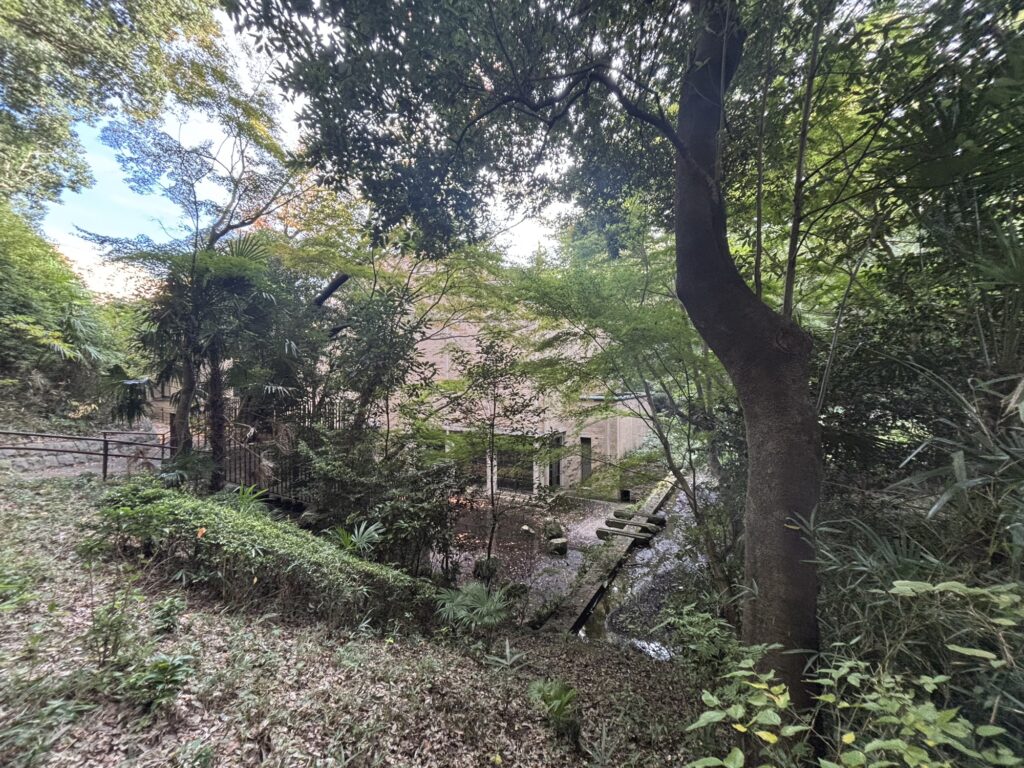
    The visible building is a museum at the park.
    The visible building is a museum.

    After finishing the Gynecology appointment and picking up her medicine, we went home. I felt like we had walked a lot, but it was only about 12,000 steps. Thanks to the right amount of fatigue, Puchiko was able to fall asleep easily that night, even though she had work the next day(Puchiko usually has trouble falling asleep on the night of her days off when she has to go to work the following day.)

    3. The Forest Park: Where We Found Healing and Where the Cats Once Lived

    The walk in the park we took between clinic appointments was certainly a wonderful reprieve for Puchiko.

    It wasn’t just a way to kill time; it was the day after the incident with “The Toxic Friend” (【Toxic Friendship & Chronic Illness】The Arrogance of Talking About “Weak Bodies” in Front of a Sick Friend), and a mental haze had settled over Puchiko’s mind. As her ally, I struggled repeatedly to clear that haze, but I couldn’t and she would seem to shake it off only to start thinking again, causing the fog to return. While she was walking, the haze was still present, but it was thinner.

    However, Puchiko has other parks like this, and they are much closer to home. I don’t mean “imaginary parks”—they are very real.

    This forest-like park is also the place where Puchiko’s three beloved cats once lived.
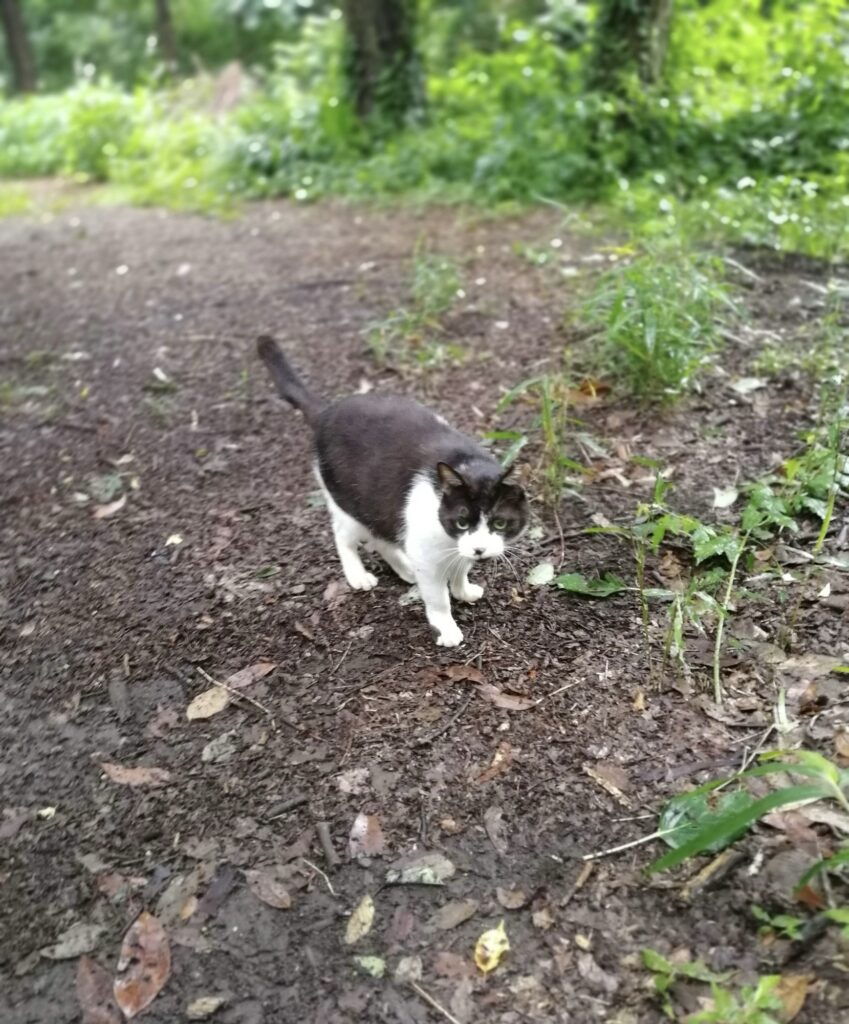
    One of my beloved cats, when he lived in a small forest.

    One of my beloved cats, when he lived in a small forest.

    Puchiko rescued the cats from this park and they spent time with us at home. The third cat, whom we took in just last month last year, sadly passed away from FIP, a highly fatal cat disease, after only three months. I remember Puchiko crying, even while trying to hold back at work. Two of the cats are still living with her now. We had one more cat besides these three, but I will save the story of her beloved cats for another time.

    To return to the main subject: When living with a chronic illness or multiple conditions, it is inevitable to find yourself comparing your current self to your “healthy self” in the past, or even comparing yourself to others. However, by seeing the trees and grass where our former cats played in this park, Puchiko feels those happy memories of the past transform into mental energy for living in the present.

    A walk in this “small forest” is not just exercise. It is our most precious “pilgrimage site” for washing away stress and quietly restoring mental health. It is why She will probably continue to live in this area, no matter how much money she earns or whatever else happens.

    4. Illness Restricts the Body, But Never the Freedom of the Mind

    The events of this single day—the stress of clinic visits, dealing with the aftermath of toxic relationships, the unexpected walk down a path,” and the nostalgic visit to the small forest that was once our cats’ home—gave Puchiko some crucial TIPs (Tools for Inner Peace).

    Chronic illness imposes endless restrictions on the body, forcing us to dedicate time to symptom management and treatment. Yet, the most vital space in our lives—the freedom of the mind and heart—remains entirely ours.

    The simple act of walking—whether it’s on a new road or in a park filled with dear memories—is the most accessible, non-pharmacological way to resolve clinic stress and restore the autonomic nervous system.

    This is why Puchiko’s unique activities, such as her organ art and finding solace in nature, are so crucial. They are her own powerful tools for asserting that, while the body may be restricted, the spirit is unconditionally free.

    For everyone else fighting the daily burdens of chronic illness, remember this: The fight is exhausting, but finding your own “forest park for the soul” is the key to protecting your mental health and finding peace in the present moment.

    When you’re feeling low, or lost in worry, step outside and try a walk! This is the Ultimate Guide to Clinic Stress Relief and Finding Peace in Nature for Puchiko.

  • 【Toxic Friendship & Chronic Illness】The Arrogance of Talking About “Weak Bodies” in Front of a Sick Friend

    Puchiko went out to meet people, which is rare for her. What I am about to write about made me furious as someone close to Puchiko, and I will refrain from mentioning names or other identifying details because I won’t write kindly about that person. Puchiko herself felt slightly bothered, but after returning home, she was watching Poirot quite cheerfully, so she didn’t seem to mind… or rather, she wasn’t paying them any mind. However, I felt such anger toward that person that I told Puchiko, “Don’t ever associate with them again.”

    I felt such anger toward that person that I told Puchiko, “Don’t ever associate with them again.”That incident only solidified my core belief: For me, Puchiko’s health and treatment come first, above absolutely everything else.

    Living with a chronic illness means that not only your body, but your mental energy is constantly being drained. That’s why it becomes necessary to clear out the toxic relationships from your life. It’s something I wish I didn’t have to do, but I made the decision. For me, Puchiko’s health and treatment come first, above absolutely everything else.

    Living with a chronic illness means that not only your body, but your mental energy is constantly being drained. That’s why it becomes necessary to clear out the toxic relationships from your life. It’s something I wish I didn’t have to do, but I made the decision.

    “The toxic friend” who will appear in this story had once made a joke out of Puchiko’s facial expressions and symptoms when she was suffering, and they did this right in front of our mutual acquaintance. This was done even though Puchiko was right there. I was standing just behind her to the left when I heard it, and I felt intensely disgusted. I couldn’t understand the nerve of someone who would mock a person for being unwell.

    I realized with absolute certainty that the sheer discomfort and stress from that person was nothing but poison to Puchiko’s recovery and health management. And so, I made the decision: “I will completely distance Puchiko, and myself, from this toxic environment.”

    Through this episode, I want to explain why “decluttering your relationships” is just as crucial as medical treatment for people living with a chronic illness.

    1. The Discomfort of Trivializing a Shared Acquaintance’s “Weakness” While Knowing Her

    What shall I call that person? Let’s call them “The toxic friend.” The relationship with “The toxic friend” has been simmering for a long time. They are someone who stimulates a deep-seated aversion in Puchiko. Since they belong to the same social circle, they occasionally have to interact.

    “The toxic friend” started talking about a mutual acquaintance of Puchiko’s who suffers from mental health illness. Though they must have known about the person’s condition, “The toxic friend” proceeded to say, “People with weak bodies are hard to invite out,” “You can’t do any job without being healthy and physically strong,” and “It gets awkward and takes too much care when you know too much about their illness.”They stated this as if intentionally disregarding the other person with a weak body (Puchiko) right there, or as if they were doing it deliberately.

    I wonder what “The toxic friend” truly thought of Puchiko’s five years of living with illness. Puchiko listened without showing emotion, like Michael Corleone, but if she had commanded me to “kill them,” I might have done it. It is impossible, of course. That is the sad fate of an imaginary friend.

    “The toxic friend” voluntarily follows Puchiko’s social media accounts dedicated to her illness, knowing full well about her struggle and dietary restrictions. Why, then, would they say such things in front of her? If they feel that way, why did they seek to associate with her in the first place?

    To make matters worse, “The toxic friend” had once made a joke out of Puchiko’s facial expression and symptoms when she was suffering during an outing, and they did this right in front of our mutual acquaintance.

    2. The Arrogance of Hurting Others and Erecting a “I Am Special” Defense Line

    Even after more than 15 years, Puchiko has not forgotten a phrase “The toxic friend” uttered. When Puchiko’s father resigned due to depression, “The toxic friend” said, “My own father crushed people like that, though.” And today, they were making a joke out of another weak person right in front of us.

    Puchiko chose the “adult” response toward “The toxic friend.” She knows that trying to correct or argue with “The toxic friend” is futile, as “The toxic friend” will only attempt to win the argument, which would be detrimental to her own mental health. Borrowing “The toxic friend’s” past phrase, “There is only right or left in the world,” this unknowingly flawed perspective is likely a manifestation of a deep-rooted self-defense mechanism that cannot neutrally respect others.

    Even if “The toxic friend” maintains an appearance of a “successful person” through sheer vanity, promoting their job as superior and masking the reality that their current office is only sustainable through parental support.

    Neither Puchiko nor I need to crush “The toxic friend’s” façade. The strength we must possess is not about controlling people like “The toxic friend,” but the wisdom to respect our own feeling of “dislike” and maintain distance. Puchiko’s small, daily peace should not be destroyed by the arrogant remarks of someone like “The toxic friend.”

    By the way, when Puchiko finished watching Poirot, I asked her, “Why are you okay after being told those things on your precious day off? Aren’t you angry?”

    Puchiko replied, “I was angry. Or rather, I just reconfirmed that my initial gut feeling when I first met this person—that I couldn’t stand them—was correct. Besides, you were the one who completely freaked out and blew up more than me, you, so watching you rage actually made me feel relieved. Thank you.”

    3. TIPs for Puchiko’s Comrades Living with Chronic Illness

    There will always be people like “The toxic friend” who try to inflict deliberate pain. When Puchiko was hospitalized for her renal disease treatment, a colleague referred to her desk as “the sick island.” Others may utter hurtful words with good intentions, or introduce unwanted information during your struggle.

    What I have learned from watching over Puchiko is that the strength we must possess, to reiterate, is not to fix people like “The toxic friend,” but to respect our own feeling of “dislike” and maintain distance.

    And there is one more thing I want to convey to the reader. Never, ever discuss your personal passions or things you love with “The toxic friend” type of person.

    For them, it merely becomes “bait” to attack your vulnerability or joy. When your favorite things are denied and met with mockery like, “You like that much?” it can deeply wound you, feeling like an assault on your very core. This is because Puchiko was once subjected to this by “The toxic friend.” Puchiko’s small, daily peace must not be destroyed by the arrogant words of people like them.

    You Might Also Like